Q&A April
In 2026, our monthly Q&A series turns its focus to the artists, peers and cultural leaders working alongside us to champion artists and the possibilities of interdisciplinary practice.
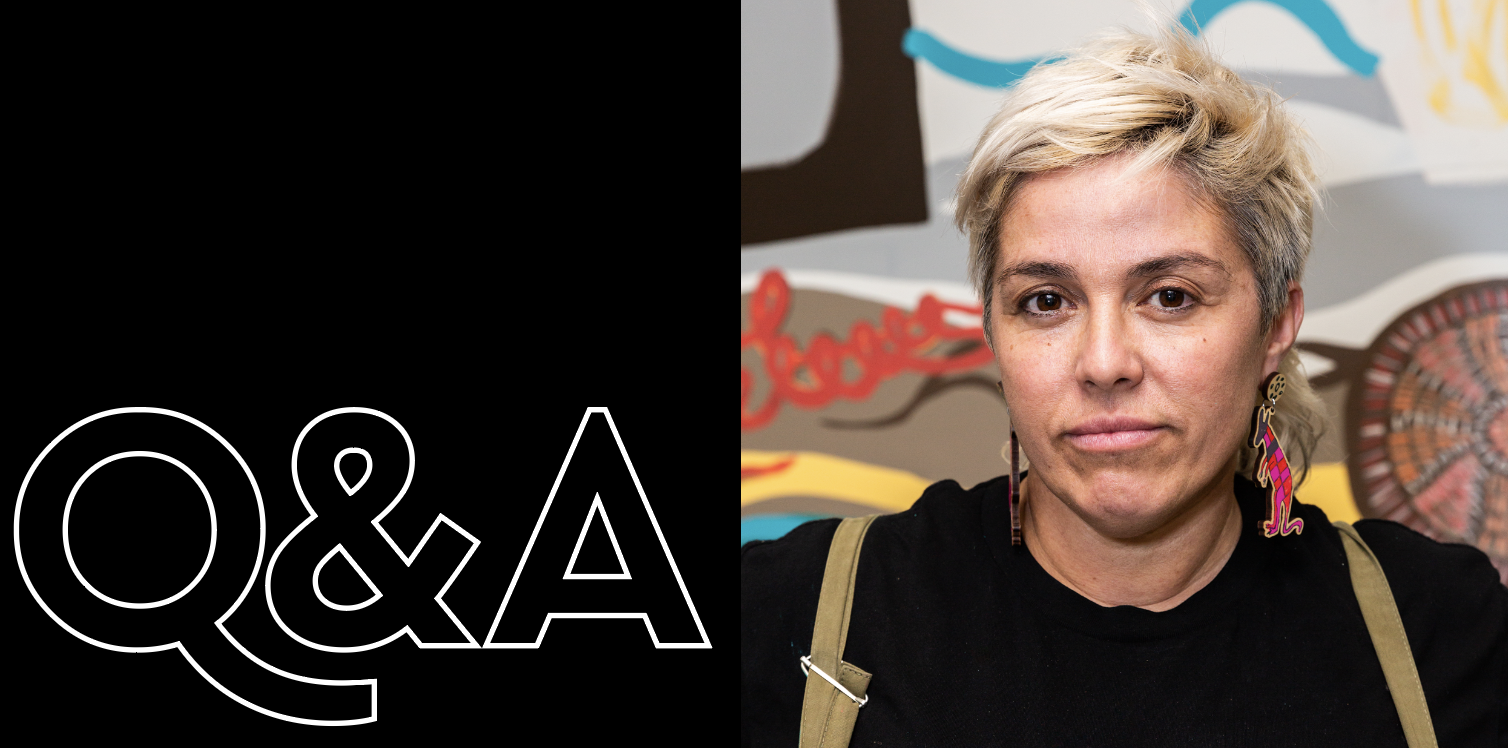
Libby Harward, photograph Sarah Osborn, courtesy NAVA.
Libby Harward
Libby Harward is an accomplished contemporary conceptual Aboriginal artist from Australia. A descendant of the Ngugi people of Quandamooka, Harward’s work is grounded in the deep cultural narratives and connections of her ancestors’ land, sea, and skies, which now intersect with and conflict with the realities of colonised urban spaces.
Libby describes her work as a performative installation. Her multidisciplinary practice spans performance, installation, video, sound and public art, often exposing the ironies of colonisation, cultural reclamation, and caring for country grounded in Aboriginal ways of knowing and being. Harward’s work challenges colonial narratives, reasserting Indigenous perspectives and sovereignty through powerful visual language and storytelling.
In addition to her art practice, Harward is the Director and founder of Munimba-ja Art Centre. She is an active cultural and arts advocate, contributing to community projects and educational initiatives that support the revitalisation and continuation of Indigenous knowledge and practices. Her work has been exhibited nationally and internationally. Her work to date has been influential within the contemporary Urban Aboriginal Art community.
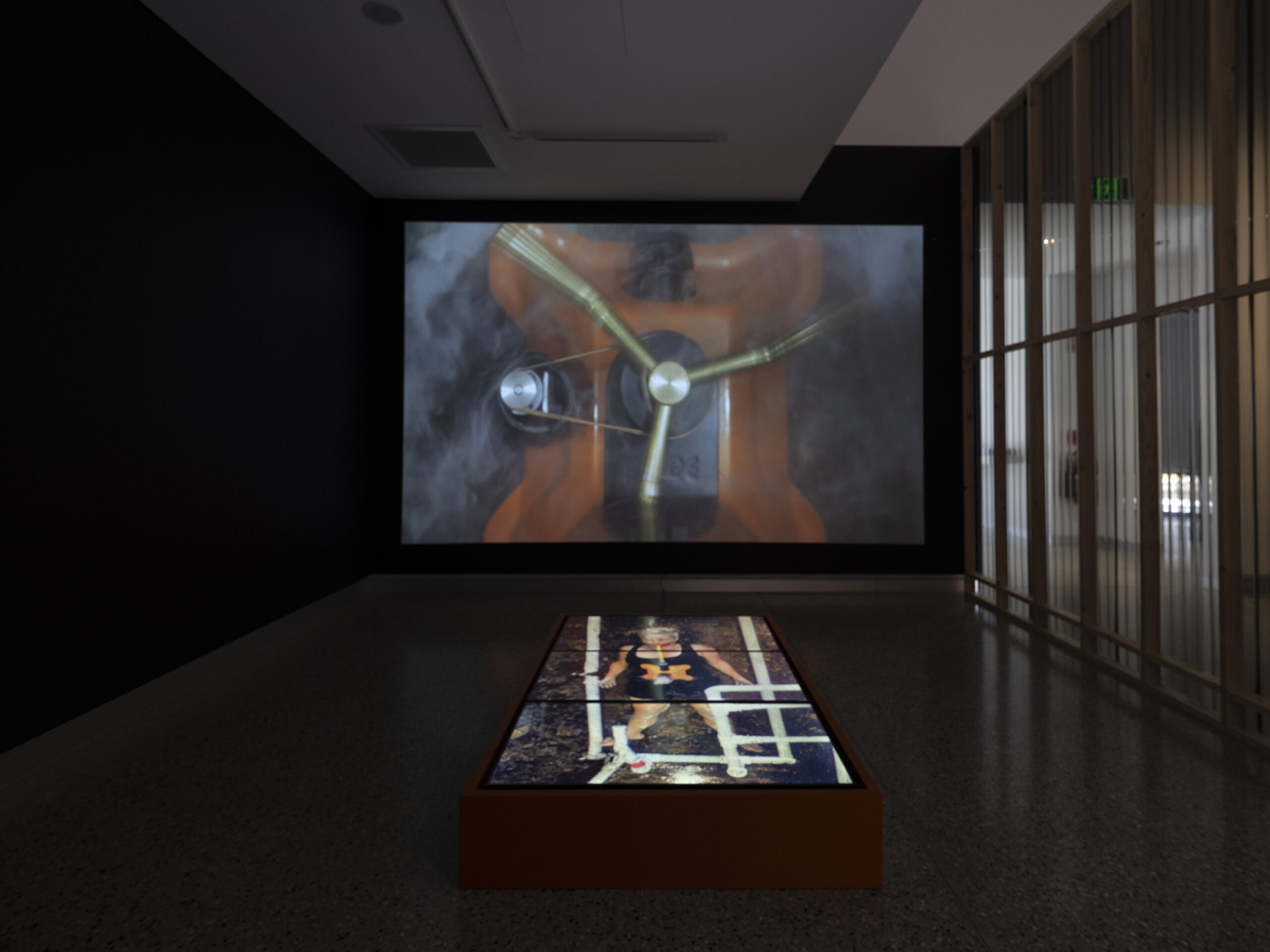
Libby Harward, Strange Weather, UniSC Art Gallery, 25 May – 3 Aug 2024. Photograph Carl Warner.
How has collaboration across disciplines shaped your work and/or practice?
I don’t feel like I make work to “make art.” Art is simply the most expanded and least censored space available to me to think, live, and express culturally and politically.
Collaboration across disciplines has been part of that. It allows the work to move beyond object-making and into relational, embodied, and place-based forms where sound, installation, conversation, relationship, governance, law, and lived experience all become material. Object making is politically challenging for me especially aesthetically pleasing objects its just so politically layered and easily exoticised.
However, as I’ve moved into mid-career, I’ve become more aware of the tension between experimentation and survival. Many financial opportunities still privilege saleable objects, which can limit the ability to develop relational or cross-disciplinary work. Collaboration is challenging however it has helped me form allyships which make it sometimes easier to resist that and to hold onto complexity, to work across forms, and to create spaces where ideas can remain expansive rather than contained. My collaborations with Dom Chen have been an example of this.
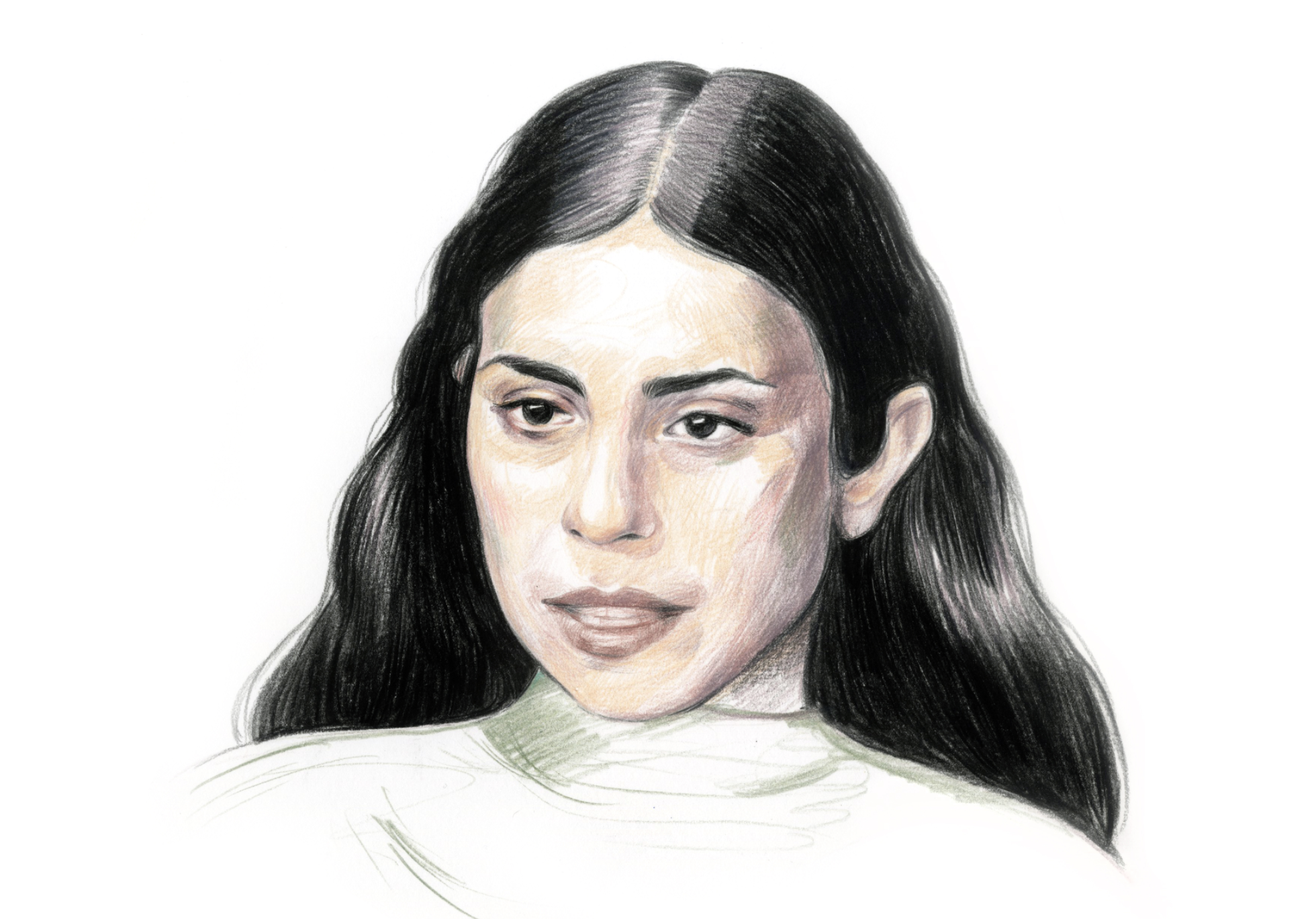
Ana Mendieta © Caroline Andrieu, Wikimedia Commons.
Which film, book, exhibition or moment shifted the way you see the world?
When I was younger, I watched films by Sadie Benning. I was around 16, and I was struck by how she politicised lo-fi aesthetics and blurred the boundaries between public and private life. I think she was only a similar age to me. The films were about her coming out from memory and were made in her bedroom. Those films and imagery have stayed with me.
Later, on an Indigenous art camp with Fiona Foley, I was introduced to the works of Ana Mendieta. Her work is gestural, embodied, and deeply relational to material and Country, her work felt connected to me and her aesthetic felt raw and my body read the work with strong resonate energy. Witnessing her work shifted my understanding of what political personal practice could look like.
I was lucky enough to take a work to Berlin – It was a work I began in collaboration with my cousin Glenda Harward Nalder who wrote about the work and supported me in my research Ngali Ngariba – showed at Gropius Bau. When I travelled to Berlin, I encountered Joseph Beuys’ work in person The End of the Twentieth Century and another work where he cast the unused, wedge-shaped space between the pedestrian underpass . Experiencing the materiality of these works in person was bodily significant and when art is connected to material and place I have a strong resonance with it. Like Mendieta, his work operates in a way that feels close to my own expressive instincts and thought processes, to the point where I sometimes avoid looking too closely. The material language is so aligned it almost feels like it should be my own.
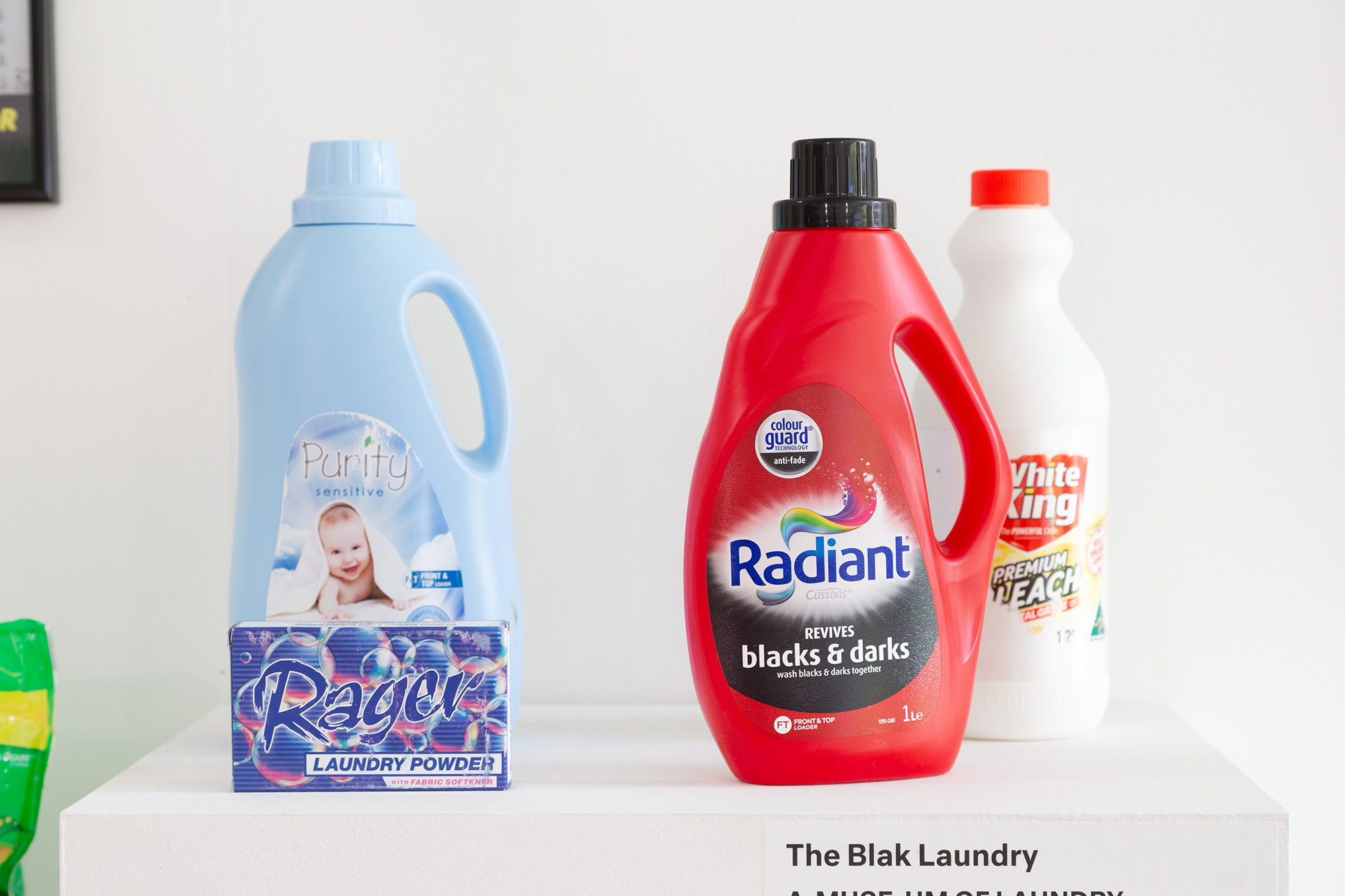
The Blak Laundry, Tarnanthi, 2025. Photograph Saul Steed.
Who would be your dream collaborator and what would you want to create together?
I think my dream collaborators right now are close to me my son Harvey, my daughter Lola, my niece Braelyn, and my cousin Chelsea. I need to work more with my mum and dad as we all age this feels more urgent. As well as maintaining my collaboration with My cousin Glenda Harward Nalder who writes about my work through our project Ngugi Bajara (Ngugi Footsteps). Working with family feels important; it’s a continuation of cultural practice rather than something separate from it.
I’d also like to keep working with curator Danni Zuvela, who I really trust and value, and explore what it could look like to collaborate on something at scale.
I love working with Dom Chen, and I would want the time and resources for us to properly develop The Blak Laundry to expand it in a way that brings together art, relationality, place, business, law and lore in an authentic and activist way. I want to see this kind of experimental practice platformed at scale, across multiple disciplines and spaces. Maybe we could explore what franchising looks like as experimental Blak Arts practise. I’m interested in working with larger institutions and industry, but not passively I want to be able to speak back. To push against the capitalist, colonial, and extractive systems we’re often required to engage with in order to make a living as artists.
I’d also like to deepen collaborations on and with Quandamooka Country and community, and continue exploring the many ideas I’m carrying.
At the same time, moving into mid-career and needing to sustain a living, I’m increasingly aware of the pressure to compromise, to make work that fits more neatly within the expectations of the arts sector which bores me a lot. Sometimes the pressure is out of exhaustion because it’s hard to keep pushing the boundaries if you have to have another whole life that keeps the food on the table. ( I hope that doesn’t sound like im wingeing it is just a massive job)
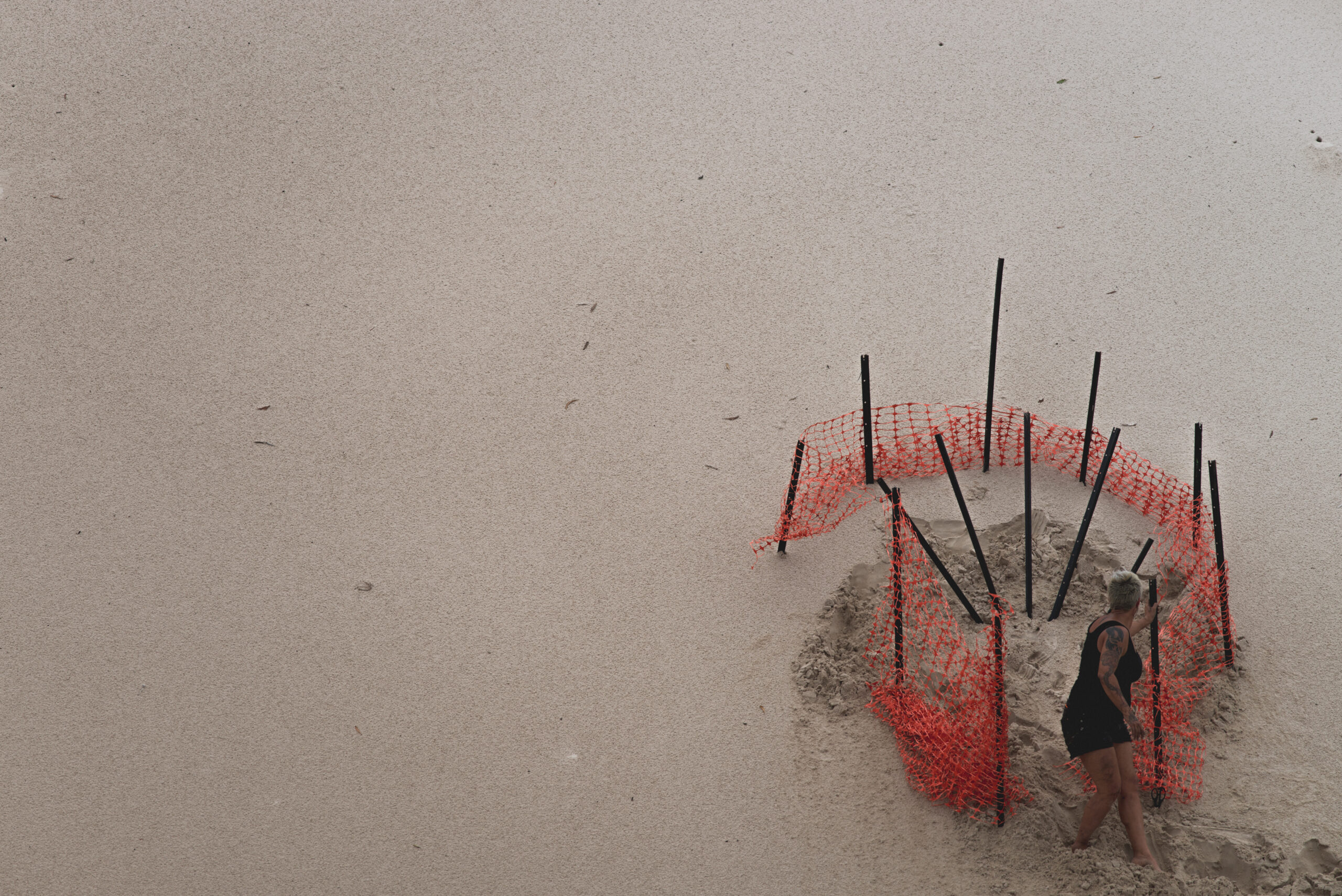
Libby Harward, Already Occupied Installation On Moreton Island (Keelan O’Hehir)
What’s next on your horizon?
Right now, I’m trying to take a break so I can reevaluate and find my passion again – make sure I am not on a consumeristic capitalist colonial art treadmill and in charge of my own practise as cultural and spiritual process
Alongside that, I’m focused on establishing Munimba-ja Arts Centre as a long-term platform for First Nations artists across the Sunshine Coast and South East Queensland. I’d love to crack into a way to be able to provide sustainable employment and allow artists to self determine the arts world they are participating in particularly for sovereign, relational, and experimental practices that don’t always fit within commercial frameworks. Somedays I enjoy the challenge of trying to integrate commercial frameworks however I am suspicious that any reel freedom will be achieved through these avenues – I’d love to maybe start collaborating with economists to depthen my understandings – but I want to make art about it at the same time
Longer term, I’m interested in undertaking a PhD not as an academic exercise alone, but as a way to immerse in and hopefully realise the many ideas I’ve been carrying. I see it as a space to expand my practice further, rather than contain it.
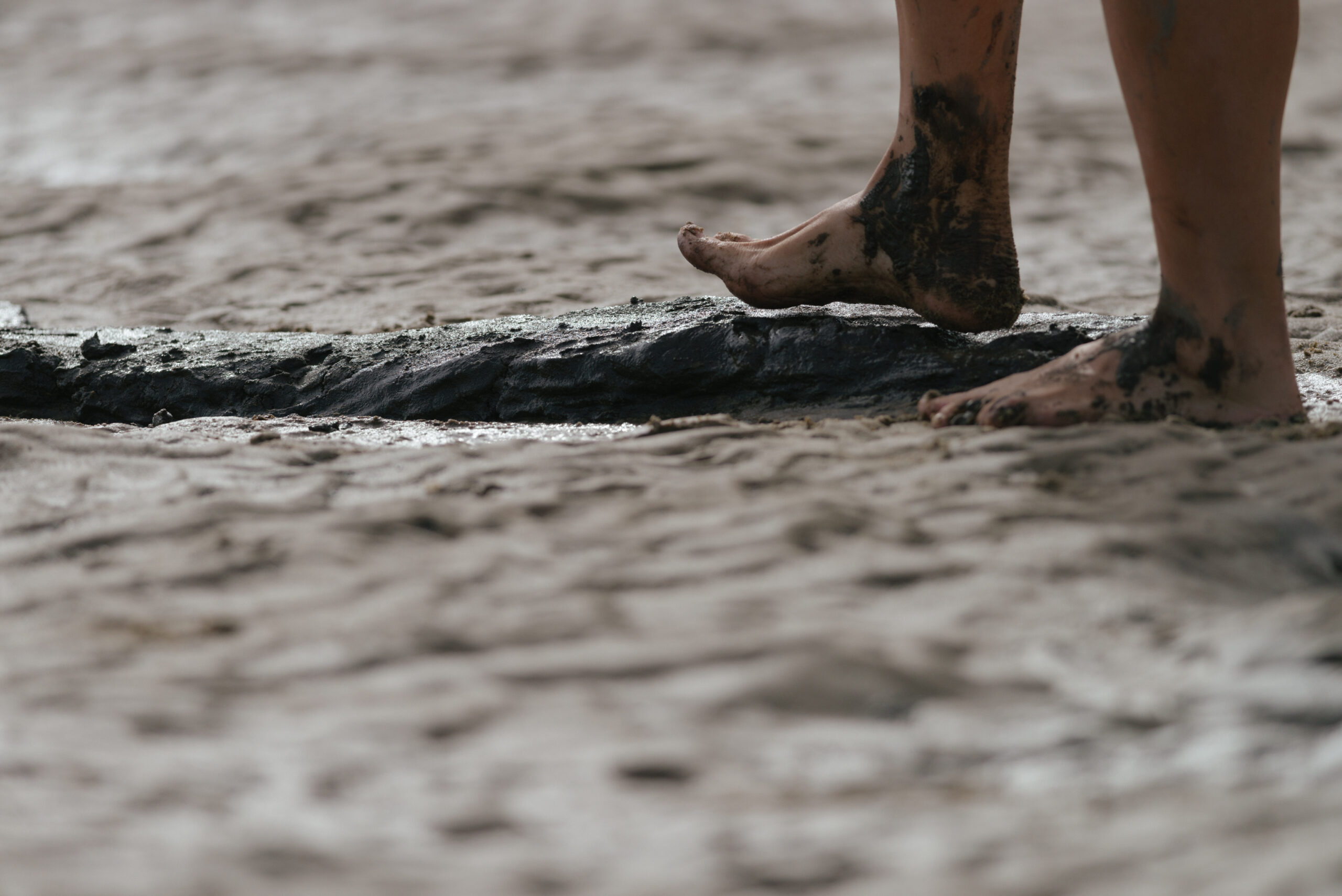
Libby Harward , The Walls Enter The Map Making, (Keelan O’Hehir)
ANAT supports work that pushes boundaries and connects fields. How do you see your work contributing to new ways of thinking or creating in the world?
I wish I had been more involved in ANAT – potentially this is something I need to pursue. The true essence of me as an artist is to attempt to create work that contributes by refusing fixed form.
It operates as a necessity. The ideas I’m working with sovereignty, relationality, cultural continuity, resistance are essential for our survival. I only wish that I could find a way to sustain a living and just make the art I know I can.
I’m interested in making visible work that exists outside of spaces classified as art. I see immense value in my people and want to bring that into visibility without having to conform to colonial, institutional, or market-driven definitions of value and legitimacy.
Through Munimba-ja and my own practice, I am building structures that allow this kind of work to exist not as an exception, but as a legitimate and supported mode of practice. It’s not the capacity or ideas that slow us down it’s the economic constraints of having to make Bungoo ( money) to survive.
What do you think of when you think about ANAT?
I think I need to be more involved