Q&A September
In 2026, our monthly Q&A series turns its focus to the artists, peers and cultural leaders working alongside us to champion artists and the possibilities of interdisciplinary practice.
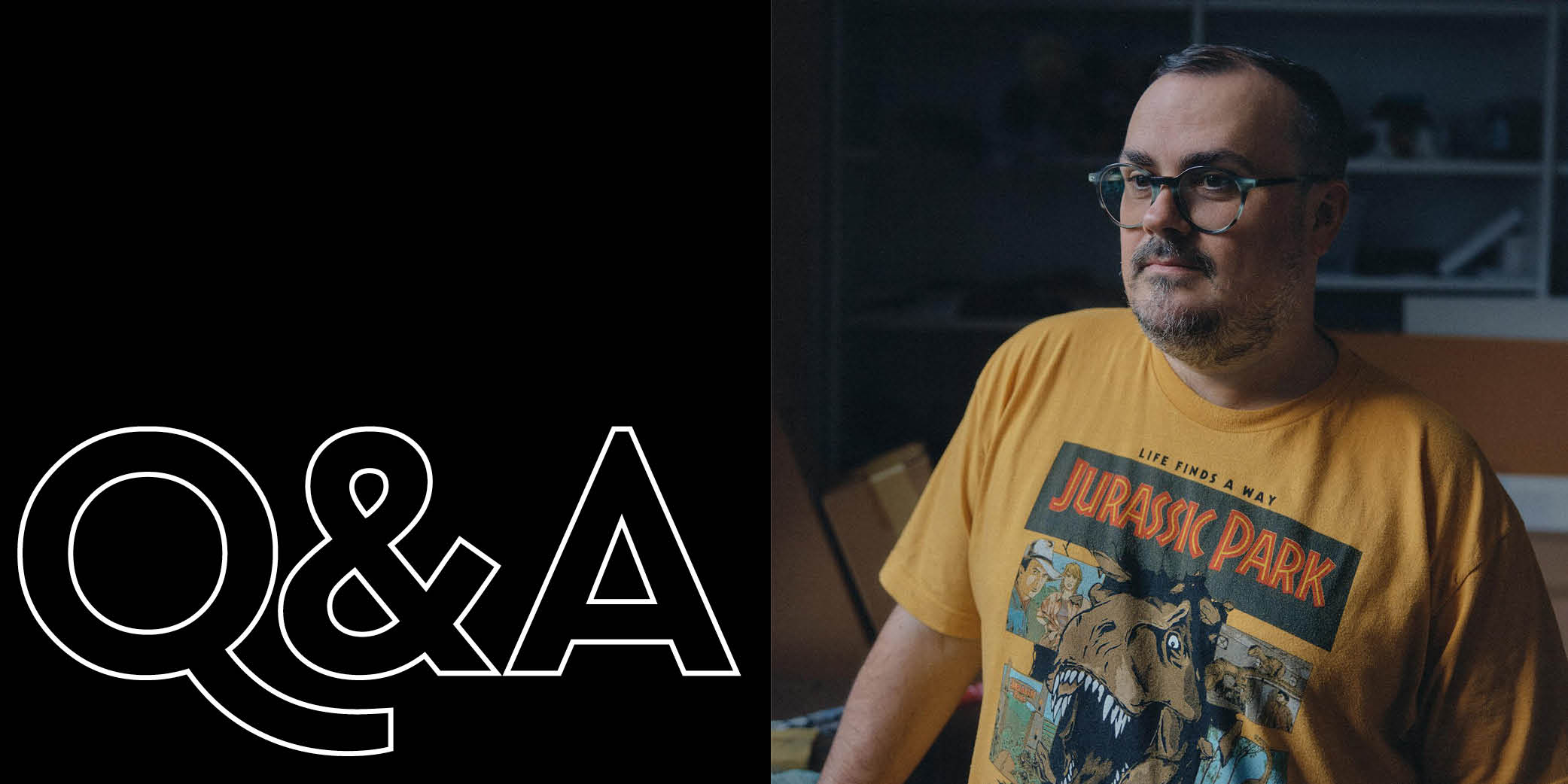
Elliott Bledsoe, Photograph Yeoseop Yoon.
Elliott Bledsoe
Elliott Bledsoe is an arts marketing consultant focusing on supporting artists and arts organisations to introduce marketing strategy and optimise their marketing communications efforts – whether IRL, URL or hybrid (in-person, online or both). Elliott has worked with ArtsHub, ANAT, BlakDance, CircuitWest, the Institute of Modern Art (IMA), the International Federation of Arts Councils and Cultural Agencies (IFACCA), the State Library Victoria (SLV) and many others. He hold a Master of Marketing from RMIT University and is recognised as a Certified Practising Marketer by the Australian Marketing Institute (AMI). Before starting as a consultant, Elliott held marketing and digital positions with the Queensland Writers Centre (QWC), ABC Radio National, the Australia Council for the Arts and others.
In tandem, he also has extensive experience in copyright, with a focus on the interplay between rights and creative practice. Elliott has spent over 20 years in copyright law reform advocacy. He has also been active in open knowledge movements for a long time, but most recently as the President of Wikimedia Australia and the Co-lead of Creative Commons Australia.
How has collaboration across disciplines shaped your work and/or practice?
It’s a somewhat strange thing to stop and examine one’s own career, projects and things that you have done. What is apparent to me is that I inhabit the flux between the arts, technology, marketing, copyright and open knowledge. I have for a long time. And never has this been so apparent and urgent as now. Artificial intelligence (AI) isn’t new, but for many, the current crop of AI tools has propelled it from background and peripheral spaces to the prominence of intentional everyday use. Yet AI is more than a technological shift. It is a set of interrelated wicked problems which makes responding to its harms and risks complex. There is no guilt-free way to use AI.
This may be troubling terrain but I feel well suited to this kind of messy complexity. Partly because I am a slasher: arts marketer/copyright expert/open knowledge advocate/technology commentator/cat dad. Also because I am a communicator, I strive to communicate with clarity, purpose and persuasion. That requires a strong audience focus, a detailed understanding of the communications medium and active listening or active reading. And especially because I am a connector. I put things together – be that people, information, ideas, resources or other things.
Operating in this way necessitates collaboration. That is more than working together. It is the intentional integration of diverse skillsets and mindsets through shared challenges and mutual exchange to create something cumulative, unique and independent of each of the collaborators. Collaboration is a space where inquiry, experimentation, fun and outcomes exist equally with friction, frustration and failure.
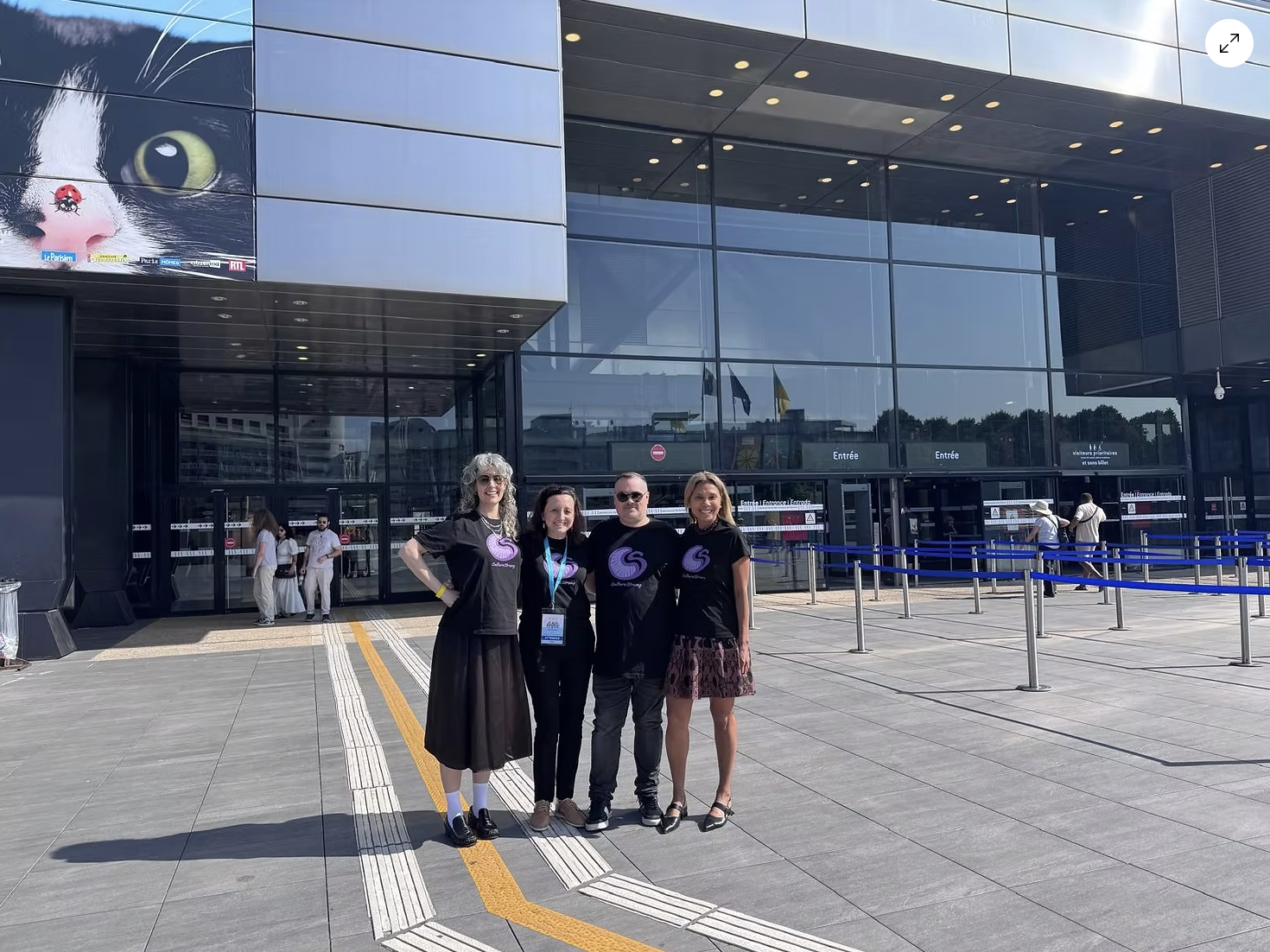
Shevaun Wright (Senior Associate, Terri Janke and Company), Belinda Spry (Executive Officer, Wikimedia Australia), Elliott Bledsoe (President, Wikimedia Australia) and Dr Terri Janke (Solicitor Director, Terri Janke and Company) at Wikimania 2026 in Paris.
Alliteration aside, collaboration has always been crucial to what I do. My work with Creative Commons Australia in the 2000s – and again more recently – was about encouraging an alternative copyright licensing approach that was flexible, legally sound and easy to use. CC is more than copyright licences. It is a response to the rigidity of ‘all rights reserved’ copyright. As such, the licences and the communities that grew around them created a shared and collaborative ‘third space’ in the copyright system. For nearly a decade I supported countless artists, organisations and projects to contribute to that knowledge commons on their own terms.
Marketing roles in arts organisations and being an arts marketing consultant are both inherently collaborative as well. They sit at the intersection of creative expression and audience engagement. I am motivated to improve arts marketing through sharing my knowledge of marketing strategy and by training the sector to be self-sufficient rather than executing campaigns on behalf of arts brands. I do this because I firmly believe that artists and arts organisations with digital competency, confidence and curiosity are better equipped to help diverse audiences access and participate in culture.
For over a decade I have been engaged in copyright law reform advocacy, including long stints with the Australian Digital Alliance (ADA) and the Australian Libraries and Archives Copyright Coalition (ALACC). Engaging with parliamentarians, policymakers and bureaucrats, as well as stakeholders who share your position and those who don’t, requires diplomacy, pragmatism, negotiation, compromise and a commitment to a long-term vision. To illustrate, in April this year Australia introduced a limited liability scheme to activate productive and creative reuse of orphan works – copyright-protected material for which the copyright owner cannot be identified or located making securing permission difficult or impossible. I and many others had been advocating for a fix to that copyright problem for over 20 years. This type of change can take time.
At Wikimedia Australia I have been part of the team collaborating with Dr Terri Janke, Shevaun Wright and Matilda Langford from Terri Janke and Company on the development of an Indigenous Cultural and Intellectual Property (ICIP) and Indigenous Data Sovereignty Guide for engaging responsibly with Indigenous content on Wikipedia and the other Wikimedia platforms. Fundamentally that work wants to make open knowledge stronger by centring cultural authority, self-determination and respect for Indigenous knowledge within the Wiki platforms.
I have also been working with Ana Tiquia and other staff at State Library Victoria (SLV) to develop an AI ethics and policy approach at the Library. It is in response to those interrelated wicked problems I mentioned earlier. AI’s impacts are complicated, interconnected, extractive, sometimes difficult to fully see and understand and are continually evolving. And it has been enmeshed into a wide range of technologies, industries and social systems. For better or worse, we will continue to see deep integration of AI into practically every sphere of human endeavour. In its mainstream iterations, it is characterised by its scale, speed, versatility, broad capability and forward momentum. Beyond hype and release cycles lies the existence of risks and harms driven by data and market capture and the sociotechnical impacts of that. There is an urgent need for regulatory intervention, yet with so many moving parts complexity can be paralysing. That is why part of the project with SLV involves running a Speculative Policy Lab through which we are co-designing speculative design artefacts to research and road-test different AI policy approaches to inform the policy responses the Library takes.
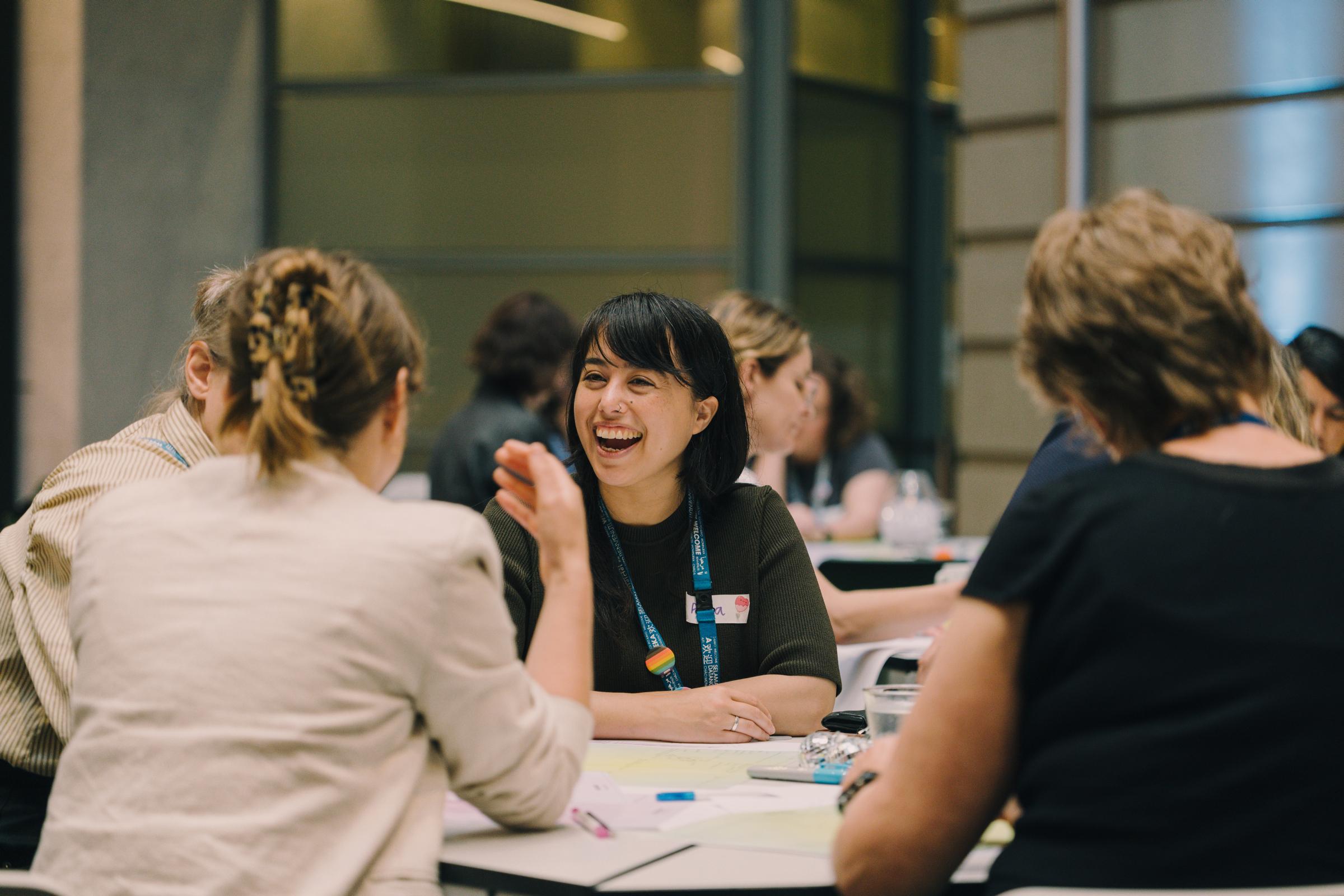
Speculative Policy Lab State Library Victoria, Photograph Yeoseop Yoon, courtesy State Library of Victoria.
A final point on collaboration: as a consultant, I am also acutely aware that collaboration looks different in different situations. It can be big or small, long-term or short. It can be face-to-face but it can also be mediated, be that real-time and synchronous – think Zoom calls and instant messaging – or asynchronous as I and others dip in and out of the shared spaces like Google Docs.
Which film, book, exhibition or moment shifted the way you see the world?
In terms of arts experiences, the recent passing of Yayoi Kusama reminded me of why I enjoy her art so much. I have seen many pieces by Kusama in different galleries around the world, but in particular I was reminded of the site-specific iteration of her work Narcissus garden 1966/2002 which featured stainless steel balls floating in the watermall in Queensland Art Gallery at APT4 (the 4th Asia Pacific Triennial of Contemporary Art). It was September 2002. I was 18, in my first year of university and mesmerised by the work.
In many ways it was one of the experiences that reinforced my love for and commitment to working in the arts, as well as my interest in arts marketing and understanding artgoing audiences. Spectacle, yes. But also evocative and compelling. I was drawn in by the simplicity of the art installation operating in tension with deeper meaning that could be drawn from it. I admired the way the work could ‘speak’ to so many different people making their way through the triennial. Each polished, reflective sphere bobbing on the surface offered the viewer a multiplicity of meaning, interpretation and reflection. And the fact that audiences could head to the QAG Store to buy their own Kusama silver ball memento was a subtle nod to the works’ subversive and critical first iteration in 1966. I still have my Narcissus garden keepsake and the APT4 catalogue.
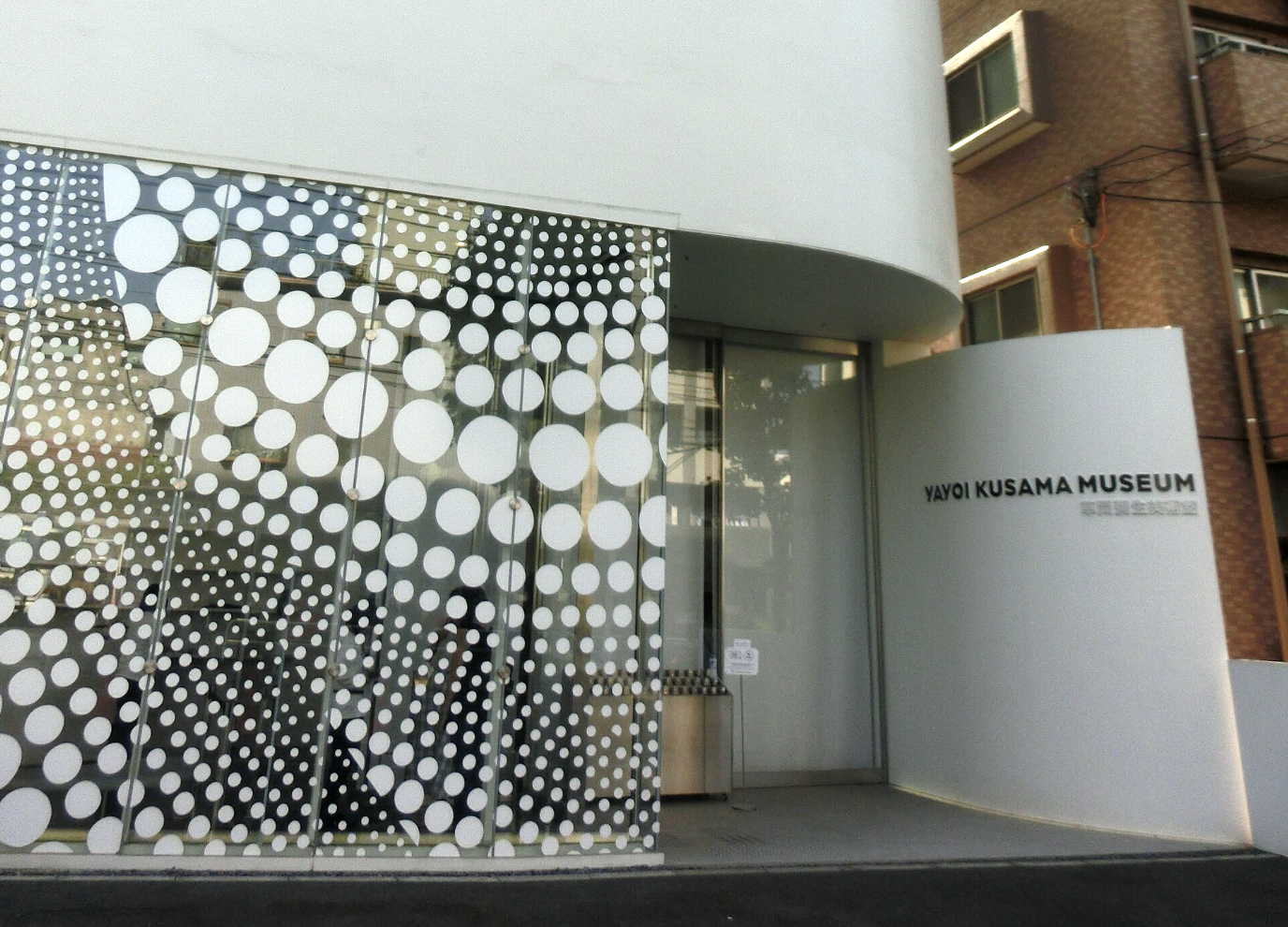
Yayoi Kusama Museum, Tokyo, 2018. Photo: Bject, via Wikimedia Commons, CC BY-SA 4.0.
Outside of the arts, a moment that has stuck with me recently was when then Bluesky CEO Jay Graber threw shade at Meta CEO Mark Zuckerberg by wearing a parody t-shirt at South by Southwest (SXSW) last year that read mundus sine Caesaribus or ‘A world without Caesars’. It makes more sense in context. Graber’s tee was in response to and created to look like the self-designed t-shirt Zuckerberg wore for the keynote at Meta Connect 2024 with aut Zuck aut nihil emblazoned across it. Translated from Latin it means ‘Zuck or nothing’, and is a play on a classic Latin saying aut Caesar aut nihil meaning ‘either Caesar or nothing’.
I liked it. It was fun, witty and would go viral – amplifying its message organically. While Zuckerberg’s shirt leaned into his surveillance capitalist wet dream of owning every platform you use and all your personal data, Graber’s subverted it to advocate against tech oligarchs. It also was a clear message about the fundamental difference Bluesky and the fediverse platforms bring to social media. It was a message and a method I could get behind – and so could a lot of other people given that replicas sold out in 30 minutes when Bluesky started selling them to support the AT Protocol developer ecosystem. It was a small but welcome reminder that we can resist the trajectory of Big Tech – and we can have fun doing it.
Graber’s shirt — which directly copies the style of a shirt that Zuckerberg wore onstage recently — says Mundus sine caesaribus. Or, “a world without Caesars.”
Who would be your dream collaborator and what would you want to create together?
TBH this question had me stumped. While there are lots of creative and smart minds I have an intellectual crush on, I realised that the reason I couldn’t answer the question was because collaboration throughout my career has largely occurred through being open to it. In many of the roles I have held and my consultancy work I have positioned myself as open to collaboration rather than actively pursuing specific collaborators. By that, I mean that I have tried to invite participation by creating a situation and maintaining an approachable posture where others feel welcome to connect with me, bringing with them their own projects and ideas.
What’s next on your horizon, a project, an idea, a wild experiment?
At the moment I am developing Artists, technology & agency: Technocriticism & critical retooling for the arts – a series of intensive arts workshops designed to help creators navigate and negotiate how to maintain their creative autonomy in the current technological landscape that sees algorithms curate our content, AdTech gatekeep our audiences, platforms host our archives, tech bros impose their ethics and AI tools increasingly enter our creative processes – often before we’ve had the chance to ask whether we want them there, and if so, how?
It will give participating artists and arts workers a moment to stop and examine their relationships with and to technology. Instead of viewing technology as a neutral utility or an inevitability of innovation and platform business models, during the workshop participants are invited to interrogate it as historically specific moments of political, social and environmental tension. This workshop series is not a set of how-to tutorials. Rather, it is an invitation to critically evaluate the systems artists and arts workers use and explore how to repurpose, resist or graft personal and organisational values onto existing digital structures.
This workshop is not technical training, nor is it a retreat into technophobia or blinkered buy-in into Big Tech promises. It is a space for honest, collegial inquiry drawing on critical theory, hands-on experimentation and peer dialogue. The workshop is designed for artists and arts workers who want to slow down, look critically at their relationship with digital tools and develop more intentional, informed and creative approaches to using them.
It will begin by deconstructing the ethics of the current tech landscape and end by designing intentional radical actions artists and arts workers can take with them to continue navigating the digital world as critical practitioners guided by their creative and ethical compass. In the intervening moments participants will examine the values embedded in digital infrastructures, reflect on how technology shapes workflows, creative or professional voice, labour conditions and the arts’ relationship to publics and communities. We will also collectively explore alternatives, workarounds and hacks. By situating their own practices within broader systems of power, ethics and infrastructure, participants will leave not with fixed answers, but with sharper questions and practical strategies for embodying their own agency when navigating complex digital environments.
WTF now?! #49 banner. Adapted by Elliott Bledsoe from vector graphics generated in Adobe Illustrator using Firefly 4 with ‘Subject’ content type selected and the lowest level of detail set. { Text to Vector Graphic prompt: Seamless pattern, very large simple shapes, 80s retro style, fluid organic elements, morphing, overlapping, blurred gradients, visible layers. }
ANAT supports work that pushes boundaries and connects fields. How do you see your work contributing to new ways of thinking or creating in the world?
While there is plenty of nuts and bolts stuff in the work that I do, there is also a big part of my work that is structural – strategic attempts to reshape the legal, digital and systematic frameworks that influence how art is made, shared, experienced, discussed and preserved. By unpacking how fast-moving technologies intersect with copyright law and creativity on elliottbledsoe.wtf and through my weekly newsletter WTF now?! I hope to connect more people in arts and culture with policy advocacy that can move us past AI panic to a pragmatic conversation about how IP and human creativity can co-exist with synthetic content.
What do you think of when you think about ANAT?
Given the recent and sudden loss of Experimenta, when I think about ANAT, I think about how important the organisation is and has been to catalysing experimental research at the intersection of art, science and technology. For artists with creative practice that interfaces with scientific research and/or technological innovation It has played the role of matchmaker, cheerleader and champion since 1988.
My own engagements with ANAT span over time and teams. I was the guest editor of an issue of ANAT’s Filter magazine – Filter 61: Creative Commons Revolution – which was published in November 2005. Then in 2007, I participated in the still/open Emerging Technology Lab – a series of forums and two-day workshops about open-source and other open ways of working that took place in Naarm Melbourne, Meanjin Brisbane and Boorloo Perth. In September that same year an article I co-authored on using openly licensed content in filmmaking featured in Filter 65: This is not open source, a special issue focused on the themes initiated at the still/open events.
In 2013 I worked with ANAT again on ISEA 2013 in Warrane Sydney where Fee Plumley and I managed social media engagement for that iteration of the International Symposium on Electronic Art. More recently I collaborated with the current ANAT team on marketing communications for SPECTRA :: Multiplicity 2022 , including online events and a three-day gathering and symposium in Naarm Melbourne.