Q&A July
In 2026, our monthly Q&A series turns its focus to the artists, peers and cultural leaders working alongside us to champion artists and the possibilities of interdisciplinary practice.
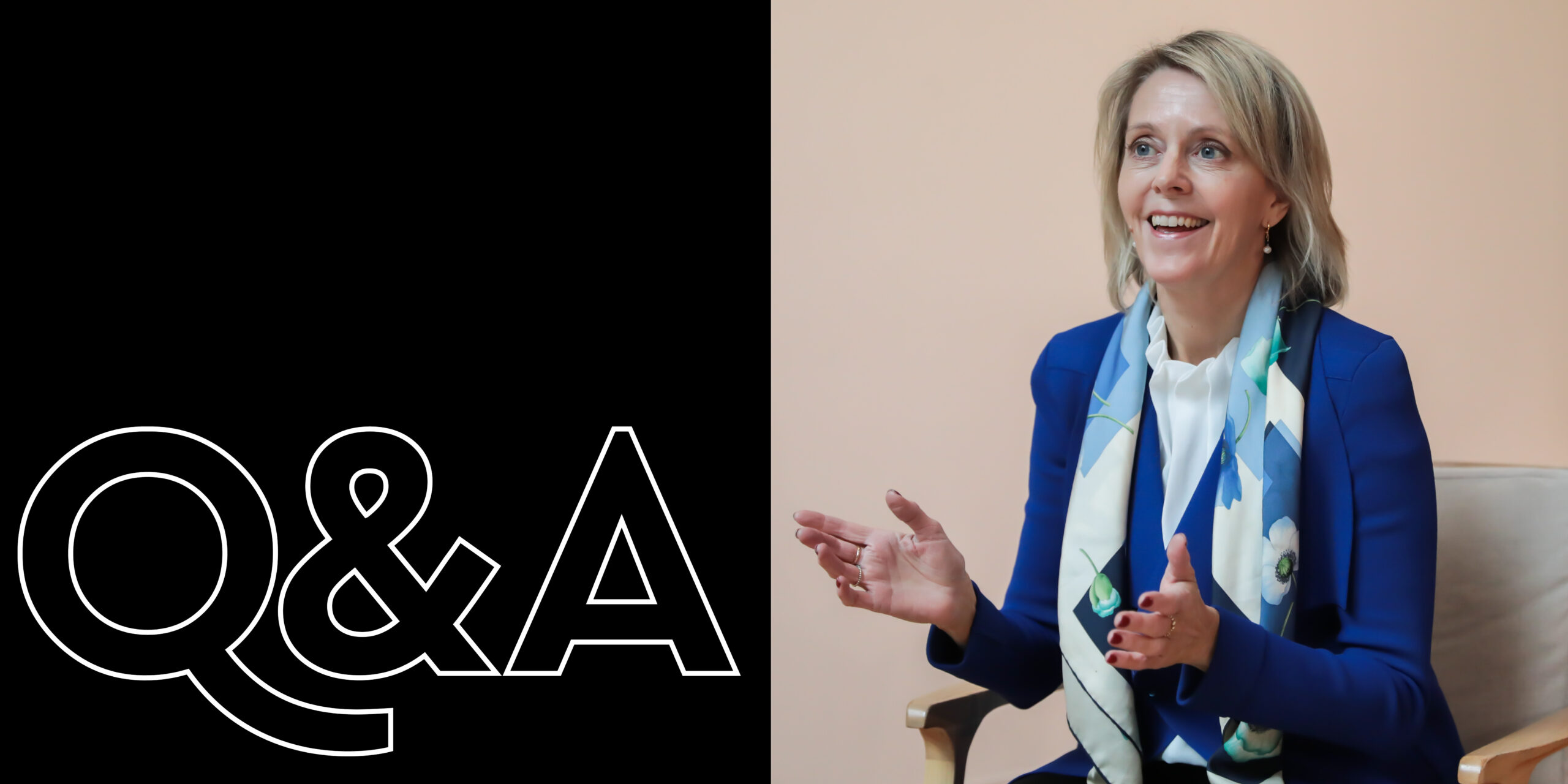
Charlotta Oberg, photograph Wendy Wen.
Charlotta "Lotta" Oberg
Charlotta “Lotta” Oberg is Program Director of the Asialink Leaders Program, Australia’s flagship initiative for building Asia-capable leadership. Originally from Sweden, her journey across five continents eventually led her to Sydney, where she lives, works and learns on the lands of the Gadigal people of the Eora Nation.
With more than two decades of experience in cultural intelligence, Lotta has worked with thousands of professionals across Arts, government, business, education and the community sectors to help them navigate difference and succeed across cultures. She oversees a distinguished alumni network of more than 1,250 leaders committed to strengthening Australia’s engagement with Asia.
Before joining Asialink, Australia’s national centre for Asia capability, Lotta worked as a social entrepreneur and cross-cultural consultant, including advising the Swedish Government, the International Criminal Court and political leaders around the world. She is a certified brain-based coach specialising in cultural neuroscience and is passionate about fostering inclusion, belonging and cross-cultural understanding.
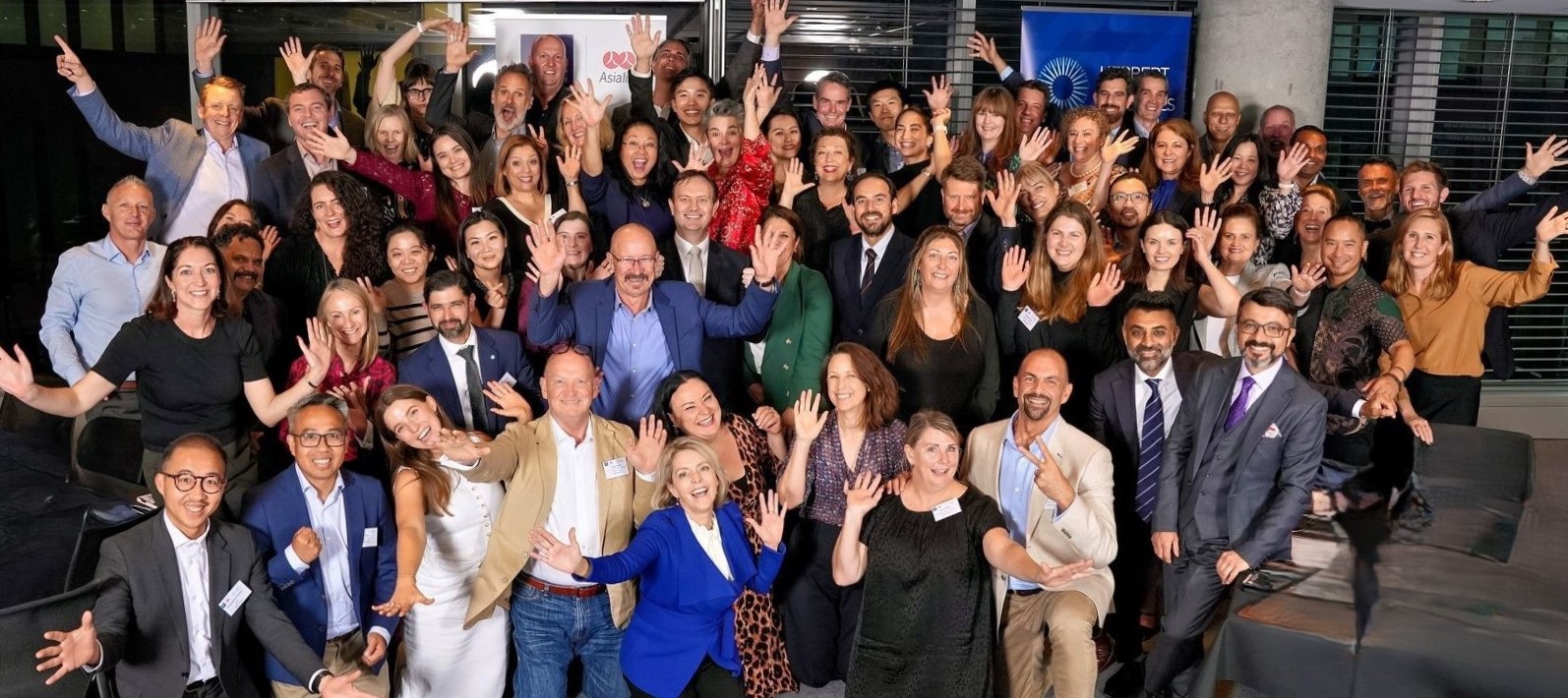
Asialink Leaders Program, 2024 graduation.
How has collaboration across disciplines shaped your work and/or practice?
This sits at the heart of my work. The Asialink Leaders Program convenes cross-sectorial cohorts for the joys and benefits of learning from different perspectives. My role is to create a committed cohort of 50 each year and create inclusive spaces designed for deep connection.
The key is listening. Deep listening, not just with an open mind but with heart and spirit, which requires intention and attention. When we truly listen, we enter each other’s worlds and create new possibilities.
“It can feel like a kind of magic, and the greater our differences, the more transformative the exchange often becomes.”
I see this happen in the Asialink Leaders Program every year, and I love seeing it flourish in other cross-cultural settings too, whether in multicultural Australia or across the world.
For me, this began with a cross-cultural program in my youth, travelling the world with 150 peers from 50 countries. Together, we created a musical performance that drew on the diverse talents of our cohort. It was my first experience of the extraordinary things that can happen when people from different backgrounds come together, and it set me on a path of seeing strength in diversity and community.
Which film, book, exhibition or moment shifted the way you see the world?
As a young person travelling the world, I read The God of Small Things by Arundhati Roy and was transformed. While the outer journey was an adventure, the book took me on an inner journey into the hidden forces that shape people’s lives. It was a form of cultural immersion without ever having been to Kerala (still!). The novel ignited my fascination with how universal the human experience can be, yet how differently it unfolds depending on context. It helped me recognise meaning, and even the divine, in everyday life.
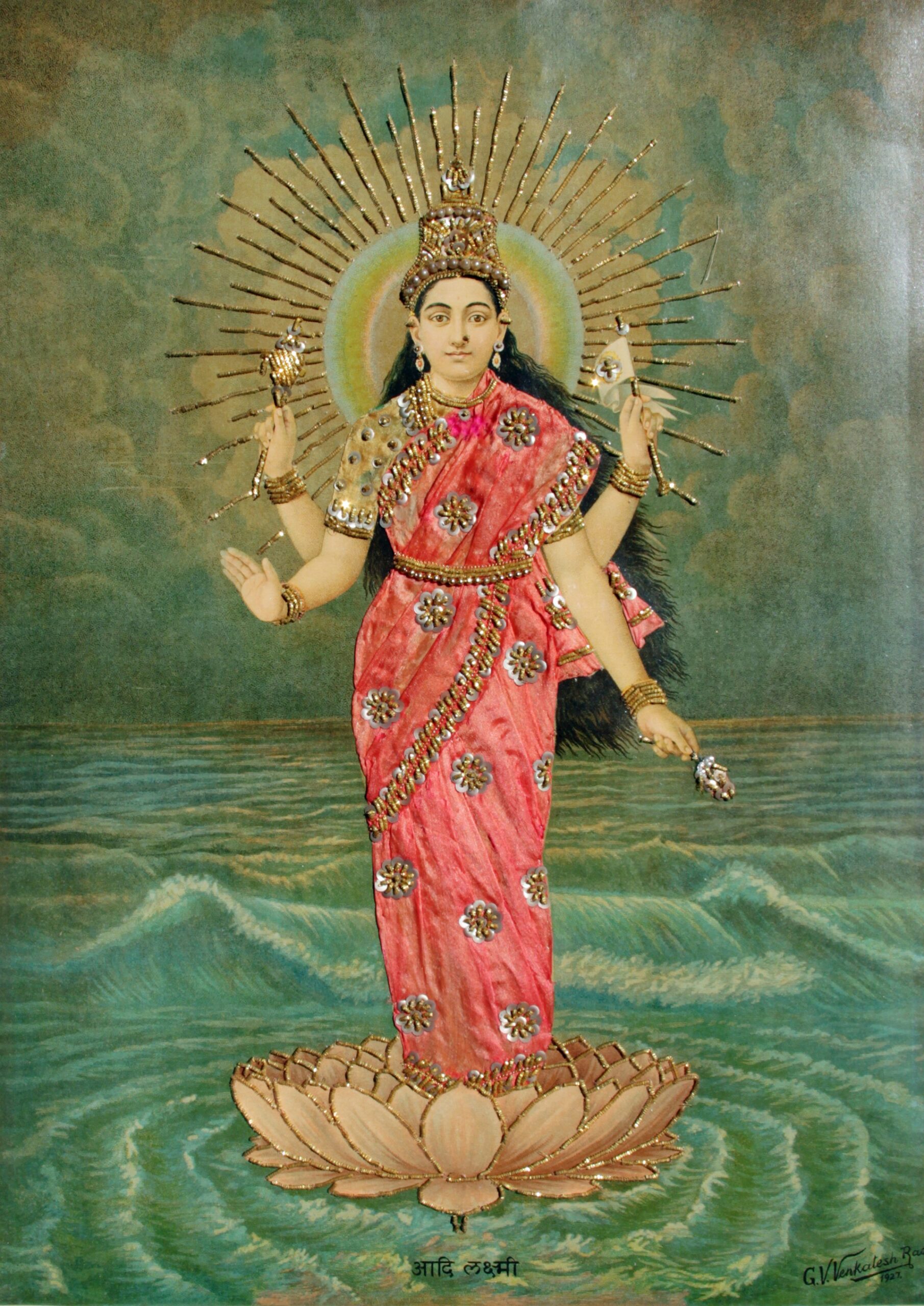
GV Venkatesh Rao, India, Ravi Varma Press, Malavli-Lonavla, India, Adi Laxmi early 20th century, printed c.1930. Oleograph with fabric and zardozi embroidery. Queensland Art Gallery Gallery of Modern Art, featured in the exhibition The God of Small Things.
Fast forward over twenty years, and I am lucky to be at QAGOMA with Asialink Leaders for the opening of The God of Small Things: Faith and Popular Culture, exploring how faith permeates everyday life across Asia through devotional prints by Raja Ravi Varma and contemporary works from across the region. The most incredible moment came from one of our own program participants, multidisciplinary artist, dancer, curator and creative producer Māsoom Parmār. He performed a special dance work for us, inviting us into a world of belonging and longing, creating a bridge from the spiritual to the human. I still think about it.
“Perhaps it is because I come from a largely secular society and a very literal Swedish cultural tradition, that this moved me so much.”
Who would be your dream collaborator and what would you want to create together?
Many of my dream collaborators are already part of the Asialink Leaders Alumni community, and I think about this daily.
I would love to work with storyteller and film maker Ej Garrett, a Darumbal and Wulli Wulli man, to document the journeys our incredible Leaders make as they pursue a greater understanding and reciprocal engagement between Australia and Asia. Especially those journeys taken together across sectors, where new ideas and relationship emerge.
I’d also love to travel with Alumni and speakers such as Uppma Virdi, Andrew Wanandy, Eric Gao, John Cheong Holdaway and Sabrina Li, all of whom create pathways between cultures. Together, they could guide a truly immersive exploration of art, business, education, science and beyond.
And if I can have a fan moment: it would be with cultural anthropologist Wade Davis, who said:
“The world in which you were born is just one model of reality. Other cultures are not failed attempts at being you; they are unique manifestations of the human spirit”. Wade Davis
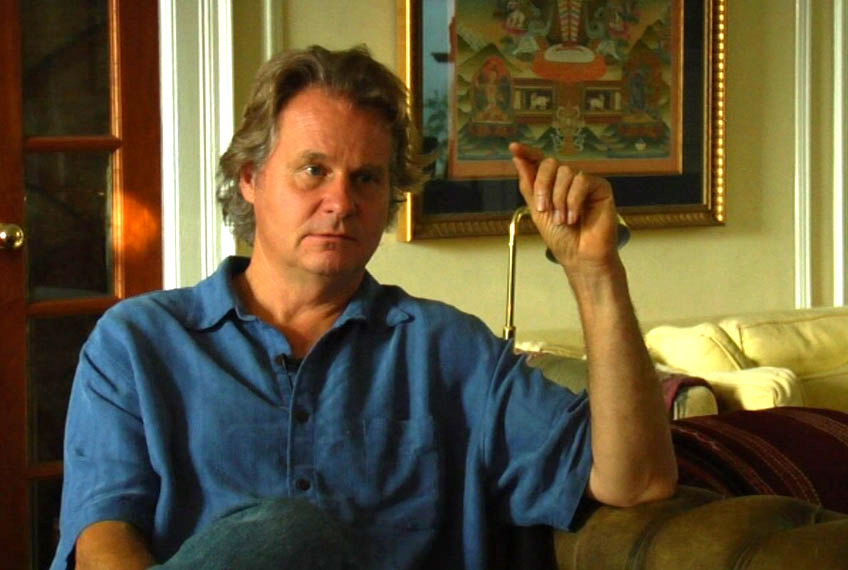
Wade Davis by Cpt. Muji via Wikimedia Commons / CC0 1.0
What’s next on your horizon, a project, an idea, a wild experiment?
Next on my horizon is to take the Asialink Leaders Program further into the region. We have a growing group of Alumni and Leaders based in Asia, so while we visit often, I would love to co-create a new kind of immersion that is not a business or tourist trip.
My dream project combines many of the things I care about most: taking a diverse cohort of curious and motivated people on a journey of immersion into Asia, while also documenting the inner journey that unfolds. Not just the experiences and insights, but the new ideas that emerge when people genuinely encounter different perspectives.
We can take that mindset, and skill, with us wherever we go, even if we don’t actually go anywhere geographically.
ANAT supports work that pushes boundaries and connects fields. How do you see your work contributing to new ways of thinking or creating in the world?
Through the Asialink Leaders Program, we create spaces for collective ambition. We curate not just content, but cohorts and connections that catalyse creative thinking and boundary-pushing ideas.
We do not begin with the explicit aim of creating changemakers, but that is often the outcome. It starts with a subtle yet powerful shift in perspective as participants deeply engage with people from different sectors, backgrounds and experiences.
More tangibly, each Leaders brings a project idea, developing it through engagement with peers, alumni and more than 150 speakers. These projects range from books, such as MP Tim Watts’ The Golden Country: Australia’s Changing Identity, to initiatives like Melanie Harris’ work building Asia capability among Indigenous Australian businesses, which helped shape a national role supporting First Nations exporters.
“Almost every week I hear about a new idea taking flight, often with support from fellow Leaders. It continually renews my belief in human ingenuity and our capacity to create positive change together.”
What do you think of when you think about ANAT?
Easy. Melissa Delaney, who I am proud is an alumni and Dunlop Fellow of the 2021 Asialink Leaders Program. She embodies the deep listening, curiosity and cross-sector thinking that I value most. We are fortunate that she continues to contribute to our flagship program, and her impact through ANAT and the broader Asialink community continues to inspire.