Q&A March
In 2026, our monthly Q&A series turns its focus to the artists, peers and cultural leaders working alongside us to champion artists and the possibilities of interdisciplinary practice.
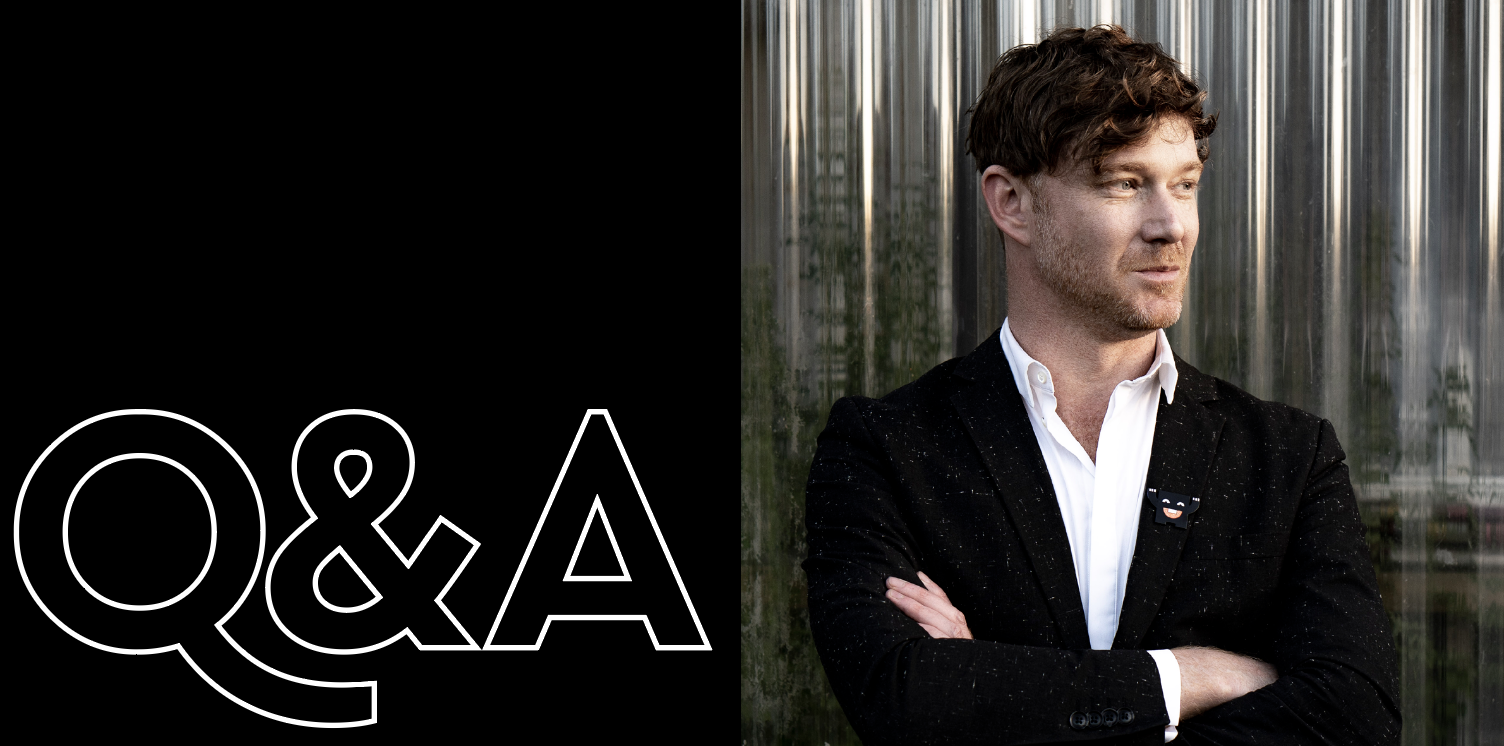
Ryan Jefferies, Director, Science Gallery Melbourne.
Dr Ryan Jefferies is Director of Science Gallery Melbourne and the Grainger Museum at the University of Melbourne, and has over 20 years experience within the cultural sector and as a research scientist at leading Australian and international institutions. He is a passionate advocate of the blurred intersections between arts, technology and science and the bold promotion of social change through disruptive and speculative creativity. Ryan has curated major interdisciplinary science and art exhibitions, festivals and residencies, and has held previous roles at Murdoch University, the University of Western Australia, University of Bristol, Western Australian Museum and Museums Victoria.
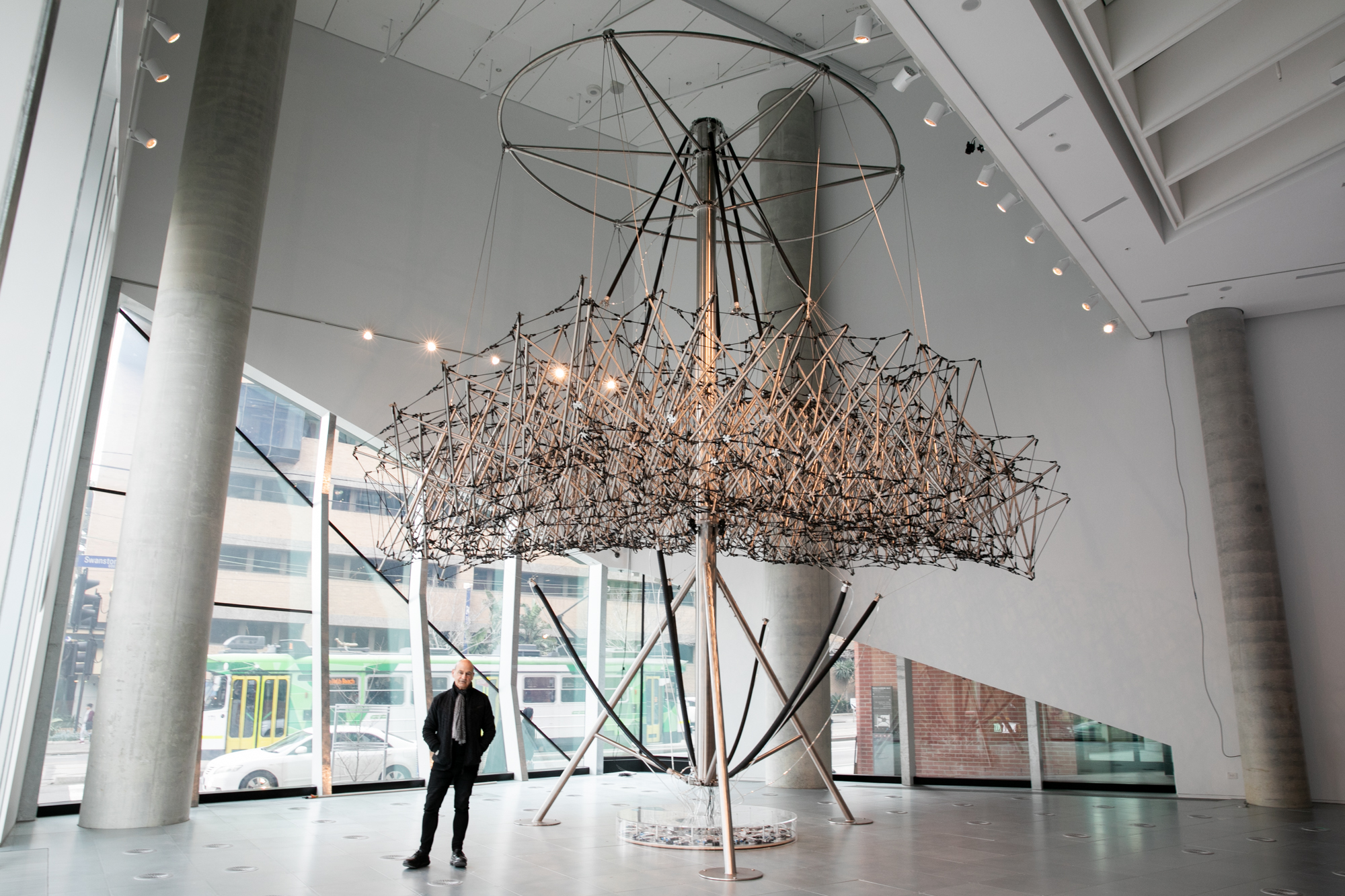
Stelarc with his work Anthropomorphic Machine at Science Gallery Melbourne. Photograph Alan Weedon.
How has collaboration across disciplines shaped your work and/or practice?
Interdisciplinary collaboration is at the heart of my work at Science Gallery Melbourne, and is a core philosophy enabling creative experimentation at the intersection of art, science, technology and society. As we step into an increasingly uncertain future of climatic crisis, global conflict and the rise of artificial intelligence, we need creative collaborations between disciplines more than ever. A biomedical researcher, a speculative designer, a musician and a high school student each illuminate different dimensions of the same problem, and the most powerful ideas often emerge when radically different forms of expertise collide.
I’ve learned that such collaborations need humility, adaptability and an embrace of uncertainty. Working with curators, creatives, academics, young people, and industry partners requires careful facilitation between experimentation, accessibility and feasibility. Importantly, interdisciplinary collaboration at Science Gallery Melbourne is always youth-centred. Young people are not passive audiences but contributors to ideas, design, and conversations. This has strengthened my commitment to co-creation as a democratic practice. One that recognises emerging generations as critical thinkers shaping the future, not simply inheriting it.
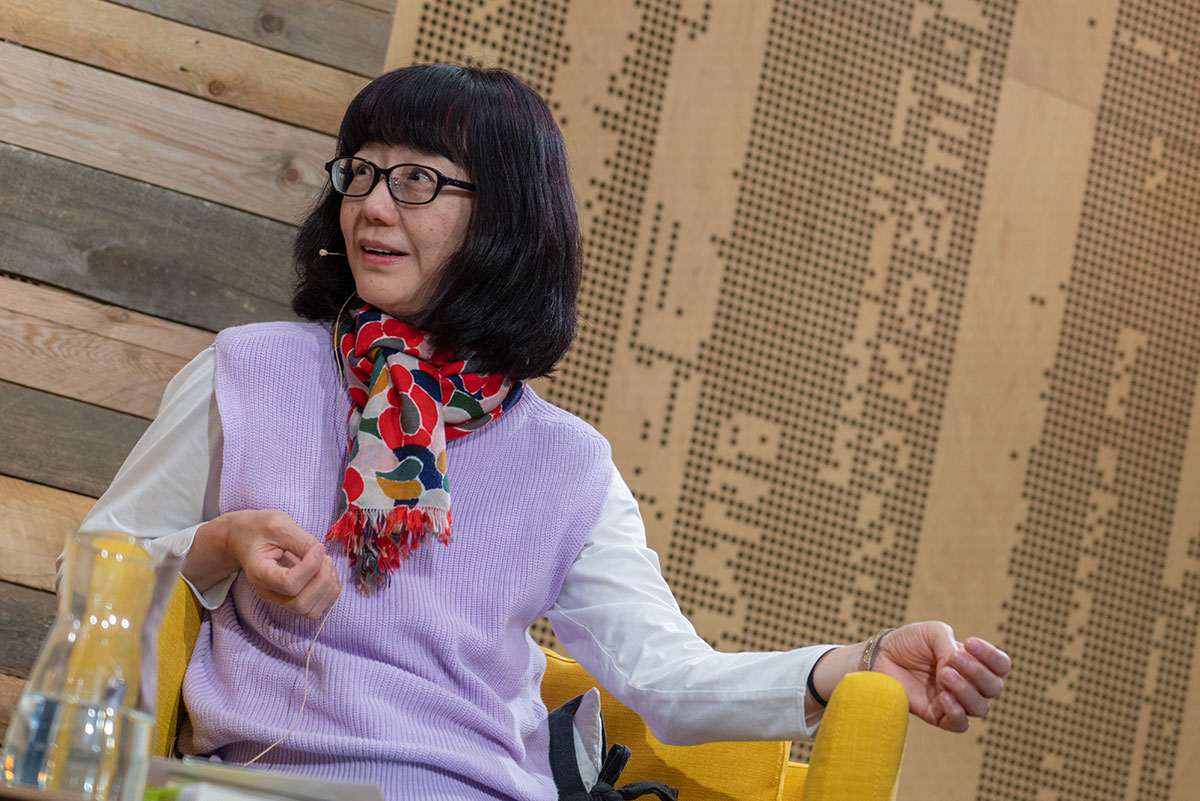
Hiromi Kawakami at LiteratureXchange Festival Aarhus, Denmark, 2023. Image Creative Commons.
Which film, book, exhibition or moment shifted the way you see the world?
I’m currently reading Life on the Edge by Jim Al-Khalili and Johnjoe McFadden, and Under the Eye of the Big Bird by Hiromi Kawakami. Both of which are shifting how I see the world. One is a work of science and the other is speculative science fiction, and together they push the boundaries of how I think about life, consciousness and the future of humanity.
Life on the Edge explores the emerging field of quantum biology and the idea that fundamental biological processes may depend on quantum phenomena such as tunnelling, coherence and entanglement. Photosynthesis, enzyme reactions, bird navigation and even smell might rely on subtle quantum effects occurring inside living cells. In contrast, Under the Eye of the Big Bird shifts the perspective to the deep future of humanity. Kawakami imagines a distant world in which humans have evolved into multiple forms of existence and explores how societies might adapt as the Earth changes and human populations evolve to survive.
Who would be your dream collaborator and what would you want to create together?
I’ve been incredibly fortunate to have already worked with so many dream collaborators at Science Gallery including Lucy McRae, Adam Goodes, STELARC, Bjork, Drew Berry, Patricia Piccinini, Yunchul Kim, Orlan, Ai Hasegawa and SymbioticA plus so many more. From futurist beauty salons to anthropomorphic robots, to the sex pheromones of sharks, the future of food and Indigenous data sovereignty, the impact of these collaborations has been truly inspiring. And as Director of Grainger Museum, I’ve recently worked with dream collaborators Speak Percussion, highlighting their extraordinary avant-garde music experimentation in the exhibition Silent Hand Catches Silver Bell.
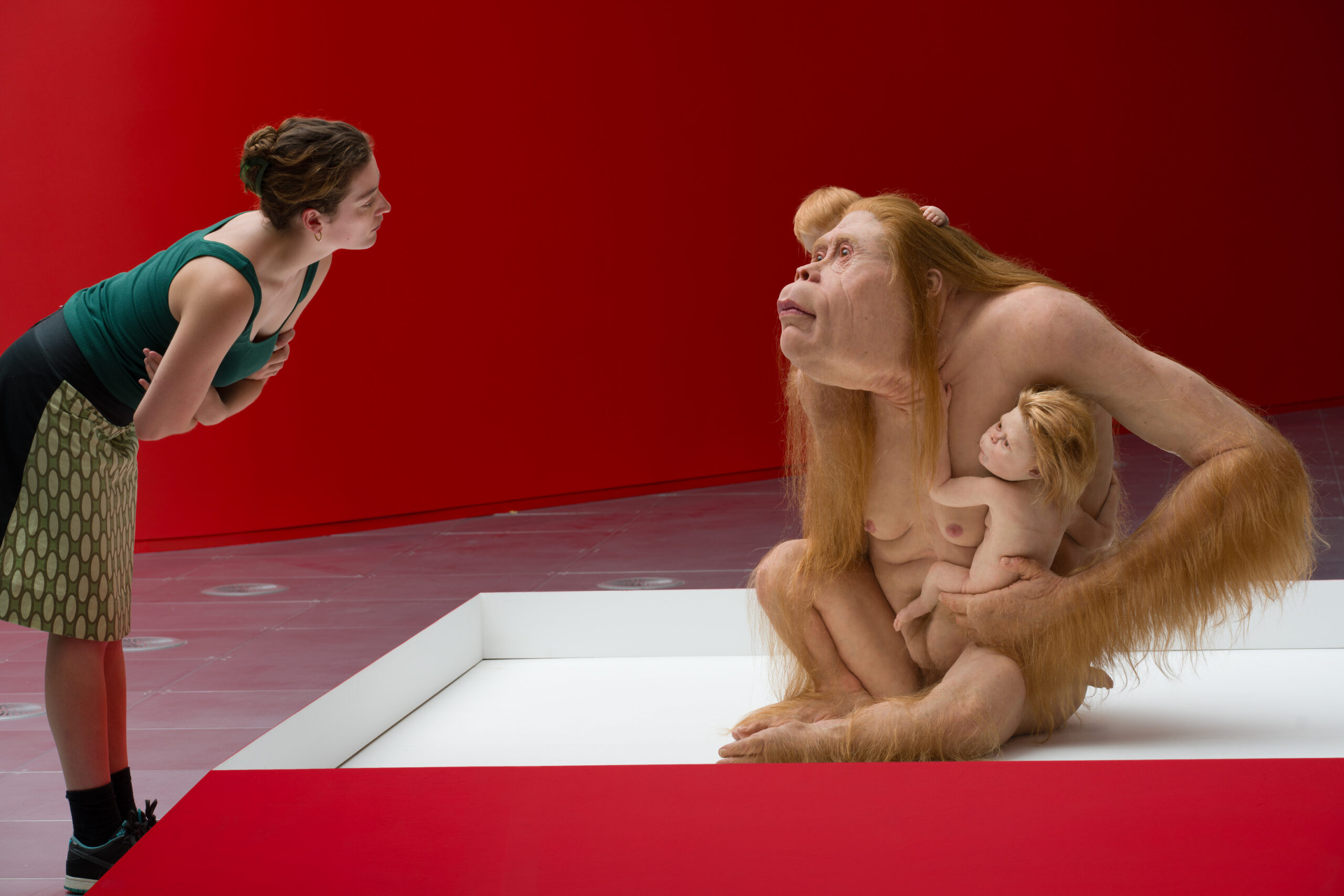
Patricia Piccinini, Kindred, 2018. Photograph Matthew Stanton.
What’s next on your horizon, a project, an idea, a wild experiment?
There’s certainly some wild experiments to look forward to as part of Science Gallery’s future program. Our next exhibition is EMERGENCE(Y), exploring adaptation to a rapidly changing world. From living vertical farms, fungal fashion, coral soundscapes, the future of biotechnology, to AI-driven political experiments, EMERGENCE(Y) invites audiences to reflect on how we might survive and thrive amid planetary transformation. It includes major collaborations with the ARC Centre of Excellence for 21st Century Weather, Melbourne Climate Futures, Creative Climate and RISING festival.
We are also honoured to be collaborating with Wiradjuri artist and Director of Reimagining Museums and Collections, Dr Brook Garru Andrew. We will be supporting a local and international First Nations takeover of Science Gallery in 2027 in collaboration with the Museums and Collections BLAK C.O.R.E program that aims to implement systemic change and reimagine how First Nations knowledges, cultural materials and communities connect with cultural institutions.
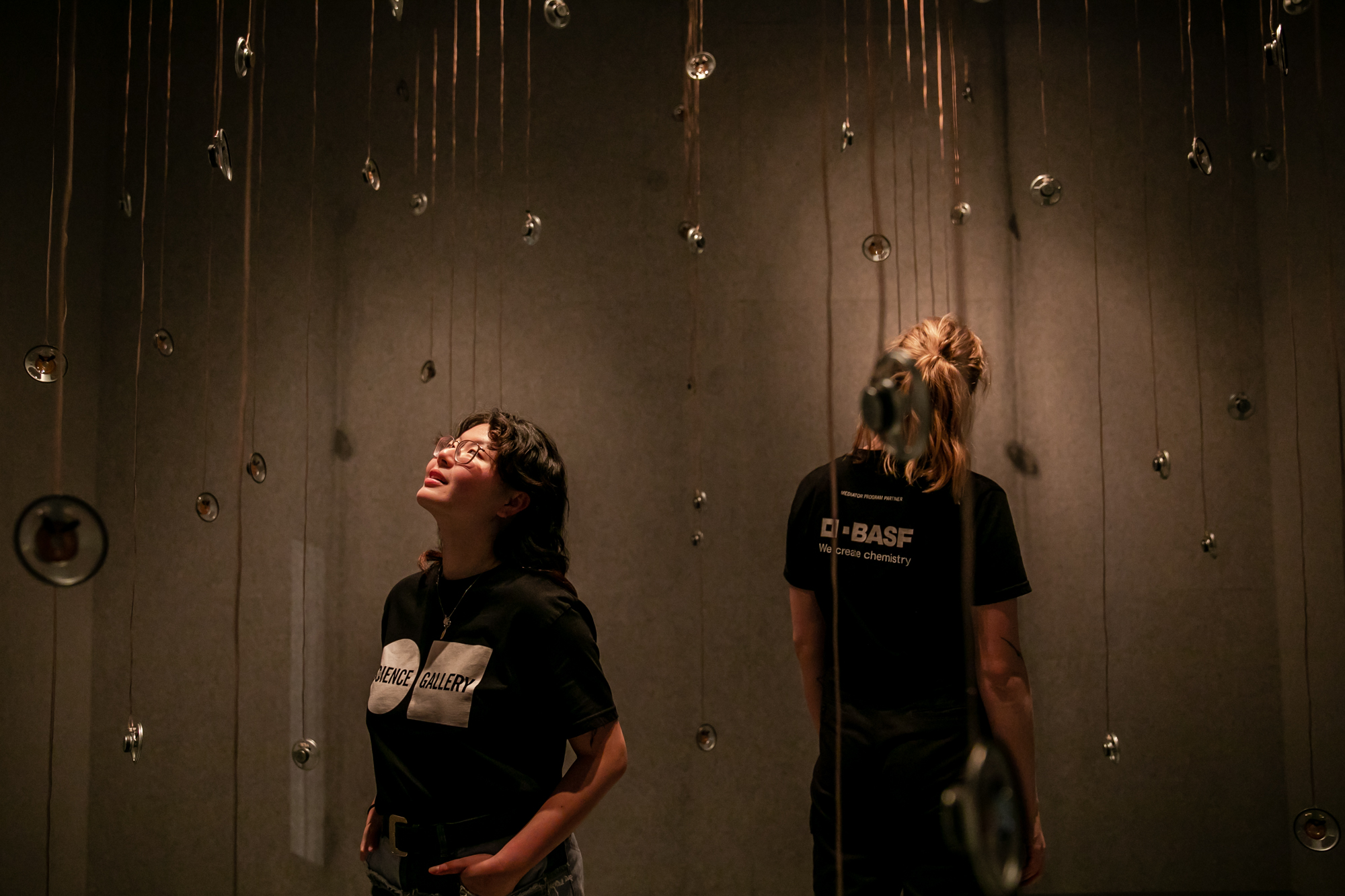
Jones/Bulley (James Bulley and Daniel Jones), Maelstrom, featured as part of the SWARM exhibition at Science Gallery Melbourne. Photograph Alan Weedon.
ANAT supports work that pushes boundaries and connects fields. How do you see your work contributing to new ways of thinking or creating in the world?
Through Science Gallery Melbourne, the Grainger Museum and the wider Museums and Collections Department at the University of Melbourne, we aim to push the boundaries of pedagogical practice and innovate the future of education. Our Global Classroom initiatives are reimagining education by connecting students internationally through interdisciplinary learning. Programs like the Future Careers Forums, inspire young people through emerging fields and hybrid career pathways, and the Universitas 21 COIL program promotes intercultural learning between universities using cultural objects.
I’m also deeply proud of Science Gallery’s annual Deaf Art & Science Festival in collaboration with the D/deaf and hard of hearing community and Expression Australia. Providing greater accessibility and amplifying Deaf cultural perspectives can generate new forms of interdisciplinary engagement by centring visual language, lived experience and inclusive design.
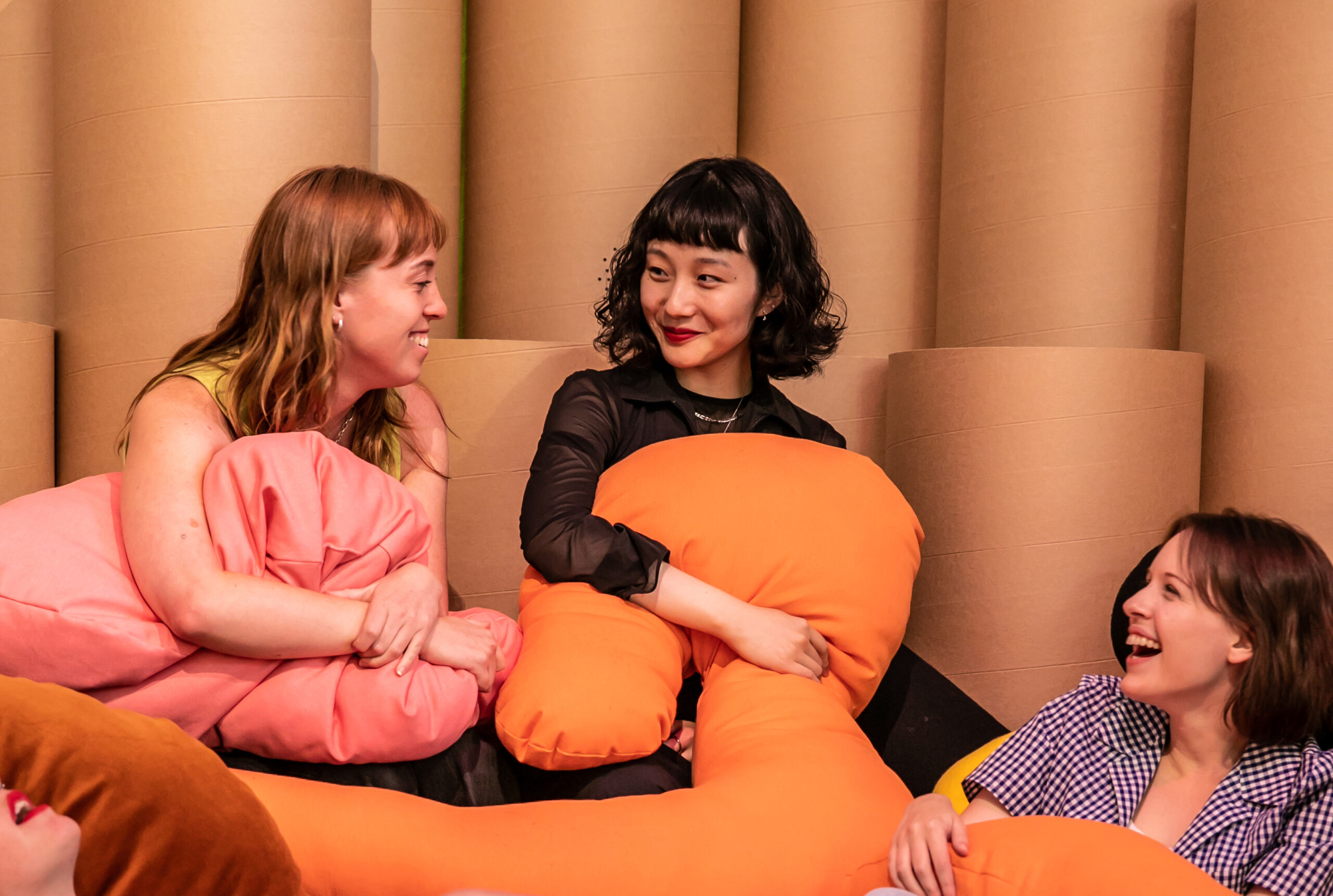
Ashlen with team members at the BREAK THE BINARIES exhibition, 2023. Photograph Alan Weedon.