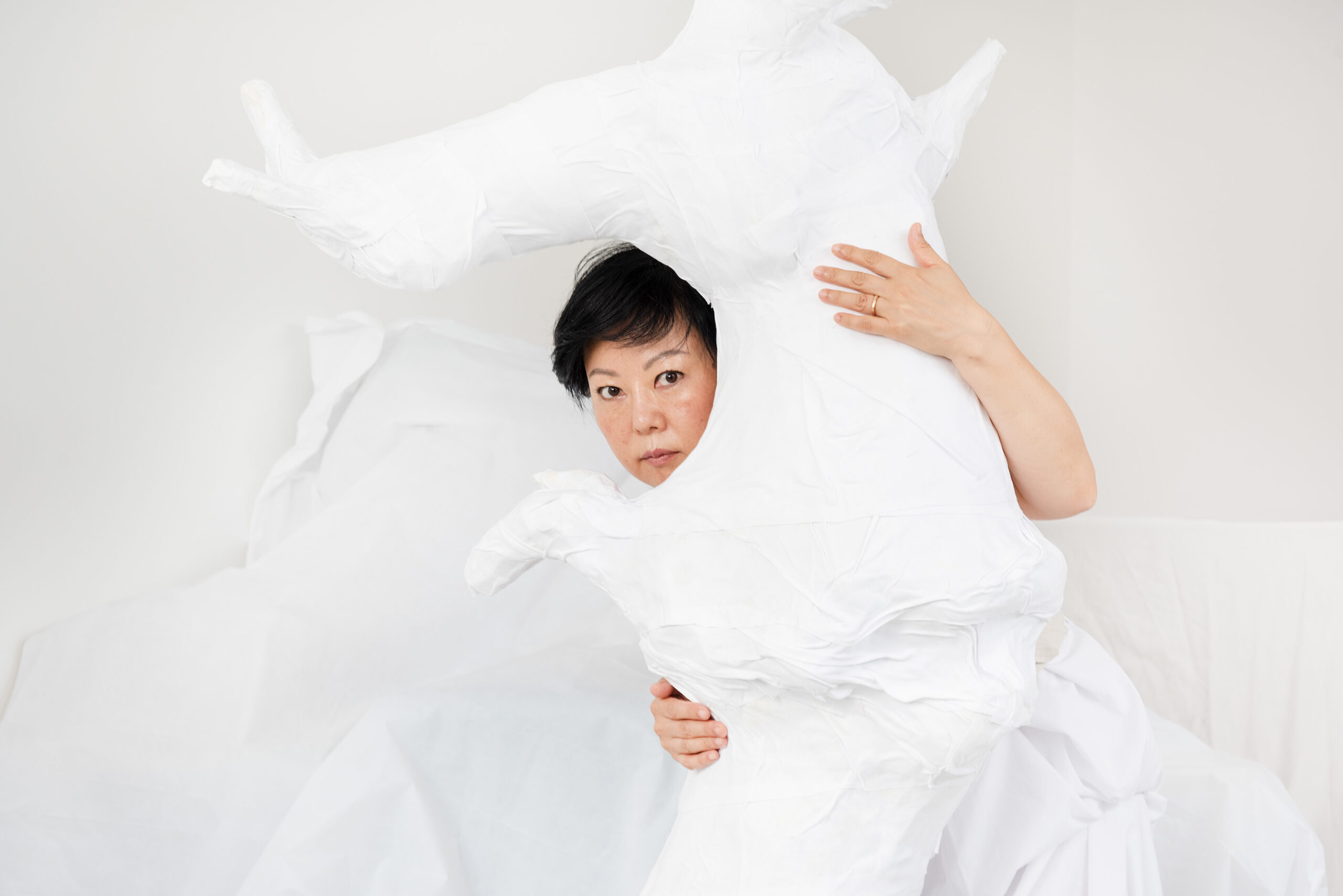
Eugenie Lee in her studio. Photograph Garry Trinh 2026, courtesy NAVA.
ANAT BESPOKE :: AJUMMA [Ah-Joom-Mah] WELLBEING CLINIC
ANAT Bespoke :: AJUMMA [Ah-Joom-Mah] WELLBEING CLINIC is a participatory performance installation exploring the menopausal transition through women’s lived expertise, medical research, and the intersectional experiences of CripQueer diasporic women navigating menopause.
This ambitious new project by interdisciplinary artist Eugenie Lee involves several stages, beginning with deep, creative, collaborative research.
In partnership with ANAT, via our Bespoke program, Eugenie and her collaborators will create speculative social prescribing for women in menopausal transition. The project reframes menopause beyond the medicalised narrative of decay and stigma – ‘past biological usefulness as a woman’, ‘over the hill’ – proposing alternative matriarchal models of visibility and collective care.
Read Eugenie's Creative Research Journal
The collaborative team
EUGENIE LEE, Interdisciplinary Artist
+ JIN YIM, Cultural Dramaturg & Creative Producer (Korea)
+ SUJEONG SEOK, Choreographer (Korea)
+ DR CAROLYN BERRYMAN, Adelaide University,
Senior Research Fellow, Pain and Musculoskeletal Titled Physiotherapist, College of Health
+ PROF MARK HUTCHINSON, Adelaide University,
Interim Pro Vice Chancellor, College of Health
+ PROF DAVID MACINTYRE, Adelaide University
Director, Robinson Research Institute
+ DR JANE MISKOVIC-WHEATLEY, Sparkly Brains Psychology,
Director, Sparkly Brains Psychology;
+ DR JENNY BROMBERGER, Integrative Doctor
+ ANN TRAEGER-SPEES, Clinical Sexologist and Pelvic Physiotherapist
Principal, Full Circle Pelvic Physio and Clinical Sexology
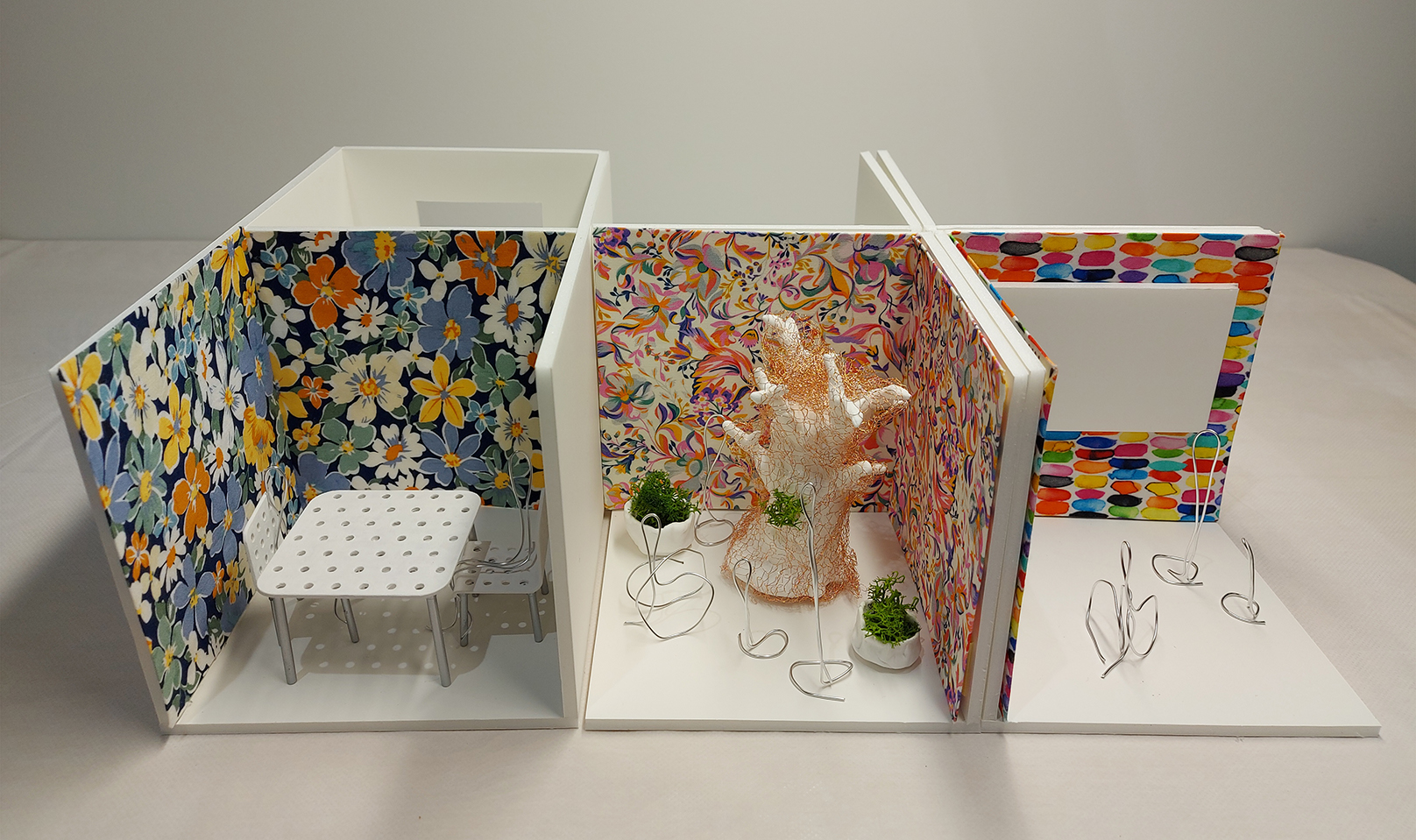
Eugenie Lee, Maquette 3D sketch. Photograph Eugenie Lee 2026.
The cross-disciplinary artwork combines:
- Reclaiming ‘Ajumma’ – a Korean gender, class and age-related derogatory term to depict menopausal women as ‘no longer worthy of the male gaze’; ‘angry dumpy hags’
- Examining the perceptions of Ajumma through Eugenie’s intersectional lens as a CripQueer Korean diasporic woman who is now an Ajumma
- Women’s lived expertise
- Science & mental health on menopause aligning with the Social Model of Disability
“Combining diverse expertise, I will create speculative social prescribing to reimagine what an alternative approach could look like — one where women’s menopause matters, and they feel seen, validated, and nurtured.” Eugenie Lee
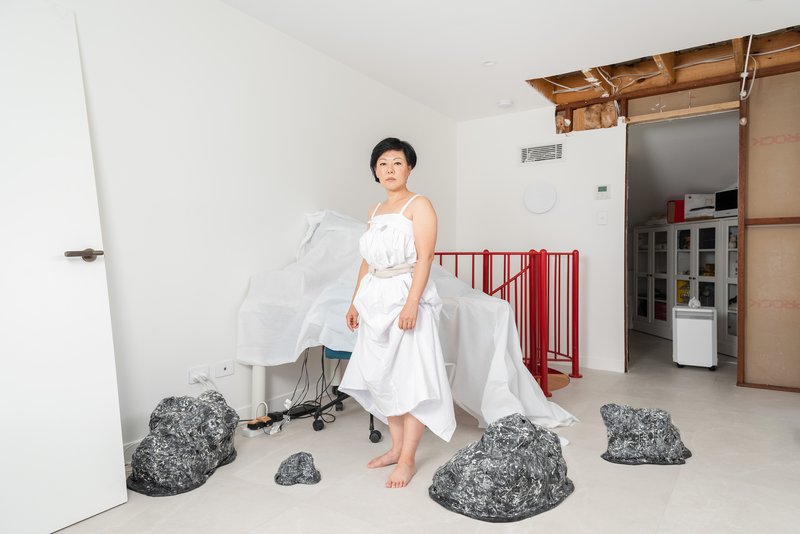
Eugenie Lee, photo by Garry Trinh, courtesy NAVA 2026.
Eugenie Lee is a CripQueer, autistic, Korean-Australian interdisciplinary artist. Her conceptual research explores reimagined antidotes to stigmatised human conditions with which she has intimate experience, such as persistent (chronic) pain, post-colonial medical misogyny, hidden disability, and diaspora.
She collaborates across the sciences, humanities, technologists, and lived-experience communities to create research-based participatory performances, installations, sculptures, and paintings. Her works were exhibited at AGNSW, Science Gallery Bengaluru, UNSW galleries, MOD., among others, and featured in The Guardian, Artlink, RealTime, The Australian, Routledge, The New York Times, ABC, and SBS Korean radio. Eugenie received grants and residencies from Creative Australia, Create NSW, Synapse (ANAT) and is a Creative Access consultant and Access Advisor for global organisations.
Eugenie, an ANAT alumnus, exemplifies the transformative potential of cross-disciplinary collaboration. Her participation in an ANAT Synapse residency in 2015 marked a pivotal moment, providing her first in-depth opportunity to work alongside scientists specialising in chronic pain research. The power of this collaboration Eugenie says “elevated her ideas and ambitions” —she began as a visual artist, and after two years emerged as an experimental, interdisciplinary practitioner.
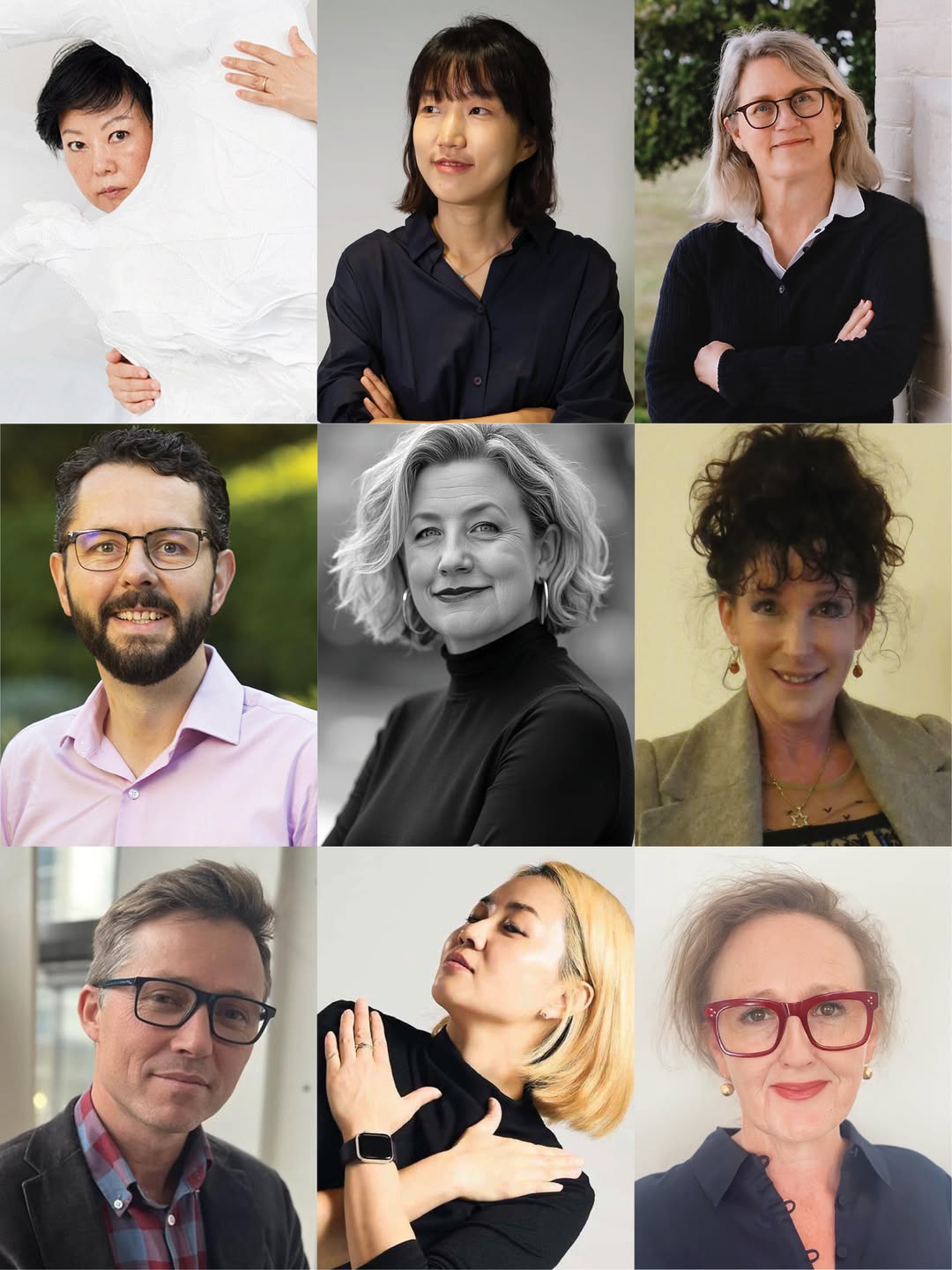
Image: Top L-R Eugenie Lee, Jin Lim, Dr Carolyn Berryman. Centre L-R Professor Mark Hutchinson, Dr Jane Miskovic-Wheatley, Dr Jenny Bromberger. Bottom L-R Prof David MacIntyre, Sujeong Soek, Ann Traeger-Spees
Jin Yim is an independent producer and researcher based in South Korea, working across performance, theatre and multidisciplinary arts with a focus on public space and international mobility. Since 2010, she has produced, programmed and facilitated major festivals including Hi Seoul Festival, Ansan Street Arts Festival, ACC International Fringe, Gwacheon Festival and Pohang Festival. She has also held senior roles with Street Arts Market Seoul and the Performing Arts Market in Seoul (PAMS), leading international relations for the street arts sector and serving as Co-Associate Director in 2022. In 2019, Jin co-founded Project DARI, a collective supporting experimentation, connectivity and new ideas in arts in public spaces across Asia.
Sujeong Seok is a Korean choreographer and community dance artist specialising in participatory, wellbeing-focused performance. She holds an MA in Dance: Participation, Communities, Activism and a Master’s in Choreography from the Korea National University of Arts. With extensive experience leading community-driven choreography across festivals and civic programs, her practice centres on belonging, accessibility, and intergenerational connection. Drawing on her own lived experience as an Ajumma for the project, she mentors Eugenie in dance development and co-designs culturally grounded K-Pop choreography.
Dr Carolyn Berryman is a Senior Research Fellow in the School of Allied Health and Human Performance, College of Health, Adelaide University, and an expert clinical physiotherapist specialising in persistent pain. Her research explores brain mechanisms, cognition and lived experience to optimise recovery outcomes. She completed her PhD in 2015 under the supervision of Prof G. Lorimer Moseley and Assoc Prof Tasha Stanton, with a meta-analysis from this period cited more than 400 times. As an NHMRC Peter Doherty Early Career Fellow (2017–2021) at The University of Adelaide, she developed expertise in brain imaging and stimulation. Her work spans neurophysiological mechanisms of chronic pain and improving care for adolescents, while she maintains clinical practice at the Women’s and Children’s Hospital multidisciplinary chronic pain service.
Professor Mark Hutchinson is Dean of Research (Health) within Research and Innovation at Adelaide University. An internationally recognised science leader, he leads the Neuroimmunopharmacology Laboratory in the School of Pharmacy and Biomedical Science. His research on neuroimmune signalling and the objective measurement of pain has shifted understanding of chronic pain and addiction, progressing three medicines to clinical trials and generating significant commercial impact through spin-out companies.
Professor Hutchinson has secured more than $73 million in research funding and champions translation, consumer engagement and industry collaboration, including the “Bench to Boardroom” initiative. He currently serves on the Prime Minister’s National Science and Technology Council and the Australian Economic Accelerator Board, and is widely recognised for his scientific leadership and impact.
Prof David MacIntyre is Professor of Reproductive Systems Medicine and Director of Robinson Research Institute at Adelaide University, which is dedicated to translational research on women’s reproductive health and to fostering early childhood health globally. As head of the Microbiome in Reproduction Laboratory, he leads a team working to elucidate mechanisms of microbe-host interactions that influence the trajectory across women’s entire life stages.
Dr Jane Miskovic-Wheatley is a clinical psychologist and researcher specialising in mental health care for the performing and creative arts. In private practice, she supports organisations including Arts on Tour NSW, Bell Shakespeare, Griffin Theatre and Performing Lines to strengthen wellbeing across the sector. With 20 years’ experience in clinical research, she specialises in eating disorders and is currently completing projects with the InsideOut Institute for Eating Disorders at the University of Sydney.
Alongside her clinical work, Dr Miskovic-Wheatley is a large-scale event specialist with 18 years’ experience in theatre and major ceremonies. She has designed and directed 19 Parades of Athletes, choreographed works involving up to 10,000 performers, and led large stadium-scale creative productions internationally.
Dr Jenny Bromberger is an integrative doctor and a lover of the arts. She has been a general practitioner for thirty years, with a long-standing focus on preventative medicine and nutrition. For many years she has cared for elderly patients in aged care facilities, ensuring they remain up to date with the management of chronic disease. More recently, she completed formal training with the leading tertiary institute for Nutritional and Environmental Medicine, the Australian College of Nutritional and Environmental Medicine (ACNEM).
Ann Traeger-Spees is an APA Titled Women’s, Men’s and Pelvic Health Physiotherapist and Clinical Sexologist. Her practice draws on advanced training and extensive clinical experience in pelvic health and psychosexual therapy to deliver trauma-informed, evidence-based care. Ann’s work is grounded in a biopsychosocial understanding of the challenges many women experience across key life stages and hormonal transitions, including menopause. She considers how these changes intersect with sexuality, wellbeing, culture and lived experience. Ann is a guest lecturer at the University of Sydney’s Master of Sexual and Reproductive Health and teaches and examines in the APA specialisation program in Pelvic Health Physiotherapy.
ANAT delivers bespoke projects with artists and science, technology and research partners from the academic and private sector. As the name suggests, no two ANAT Bespoke projects are the same. Every iteration is customised to the project’s unique characteristics and is jointly supported by ANAT and the collaborator.
ANAT BESPOKE 2026 | 2025 | 2024 | 2023 | 2020 | 2019 | 2018
ANAT is a global leader in brokering opportunities for artists to work with science and technology partners. We do this because we believe artists are essential to how we imagine and shape our future. If your organisation is interested in investing in the transformational nature of interdisciplinary collaboration, please get in touch [email protected]