Q&A December
This year, in celebration of our triennial event, ANAT SPECTRA :: Reciprocity, our monthly Digest Q&A series is spotlighting alumni from past ANAT SPECTRA events. Each month, we’ll feature the interdisciplinary trailblazers integral to our triennial gatherings.
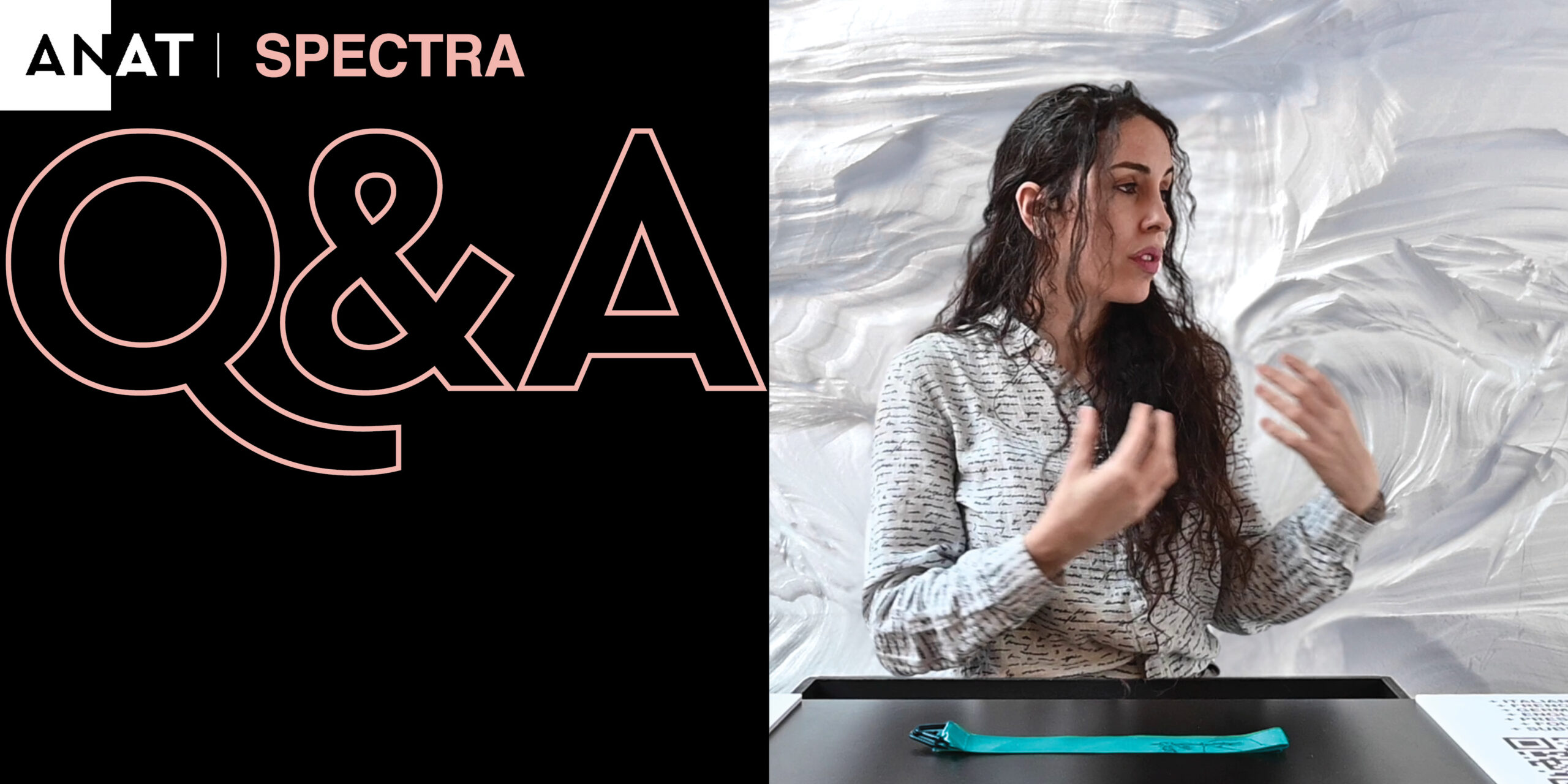
Danielle Freakley, Please Say performance video still, Social Practice, Arsenale, Venice Biennale, 2024. Credit: Danielle Freakley.
Danielle Freakley
Danielle Freakley is a Seychellois-Australian artist working in performance, social practice, interactive systems and sculpture. Freakley has exhibited her artwork in the 2024 Venice Biennale in Arsenale, previously at the Tate – Liverpool Biennial, Museum of Contemporary Art – Sydney, Performa – Performance Biennial of New York, and in various other international biennials, triennials, national galleries, museums, theatres, contemporary art spaces, kitchen floors, snake temples, theme parks, clothes, bins, beaches, mouths, trainstation toilets and graves.
“Her works can distort social communication, exposing lurking historical relationships, private subtexts, and slide into an unfading pit of re-authorship.”
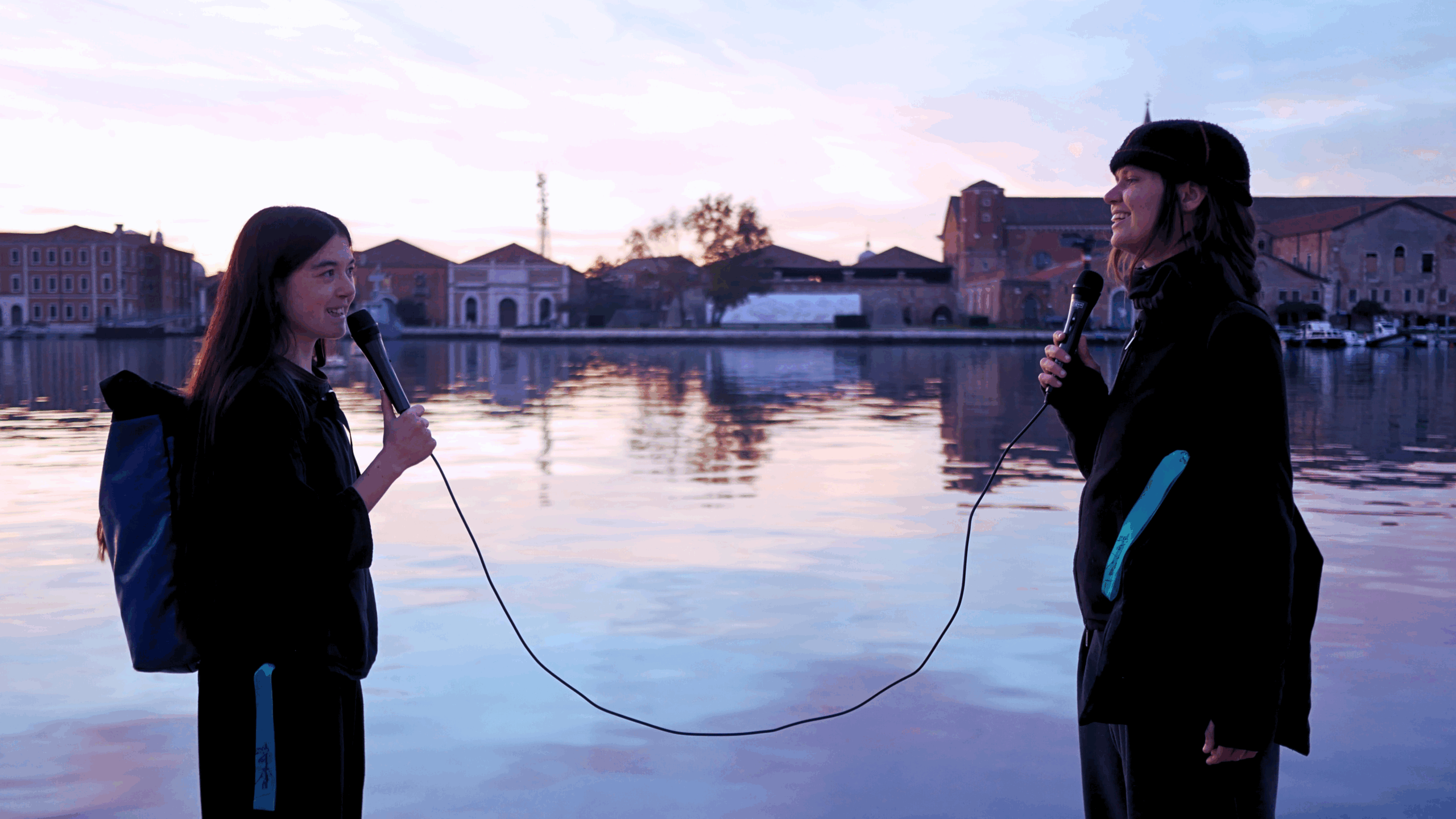
Danielle Freakley, Please Say, Social Practice, Microphones, Performers, Arsenal, Venice Biennale 2024. Credit, Danielle Freakley.
Tell us about your experience with ANAT SPECTRA.
Firstly, ANAT SPECTRA 2022 blew my mind. I loved the cross disciplinary works of the other artists / researchers / scientists / technologists presenting, with so many astonishing revelations, beauty and invention.
I was able to present my research and development on imaginary friendships at ANAT SPECTRA. The imaginary friends researched mostly originated from studies of imaginary friendships people experienced in their adult life. Including several years of research on imaginary friends through fields of media, psychology, sociology, theology and anthropology. I made a series of sculptures, performances, ran experience sampling studies, and collated a global archive of imaginary friends. The presentation at ANAT was a behind the curtain look at the work developed in PICA (Perth Institution of Contemporary Arts) in 2013 & 2020, the Oratory and Tate – Liverpool Biennial, 2016 and Western Australian Museum 2024.
The most common understanding of an imaginary friend today is either an invisible playmate for children, or in adulthood, an indication of psychosis. However more recent studies on imaginary friendships expand far beyond these two categories. They can exist as parasocial relationships, anthropomorphic relationships, spiritual relationships, fantasy and more. I would argue that.
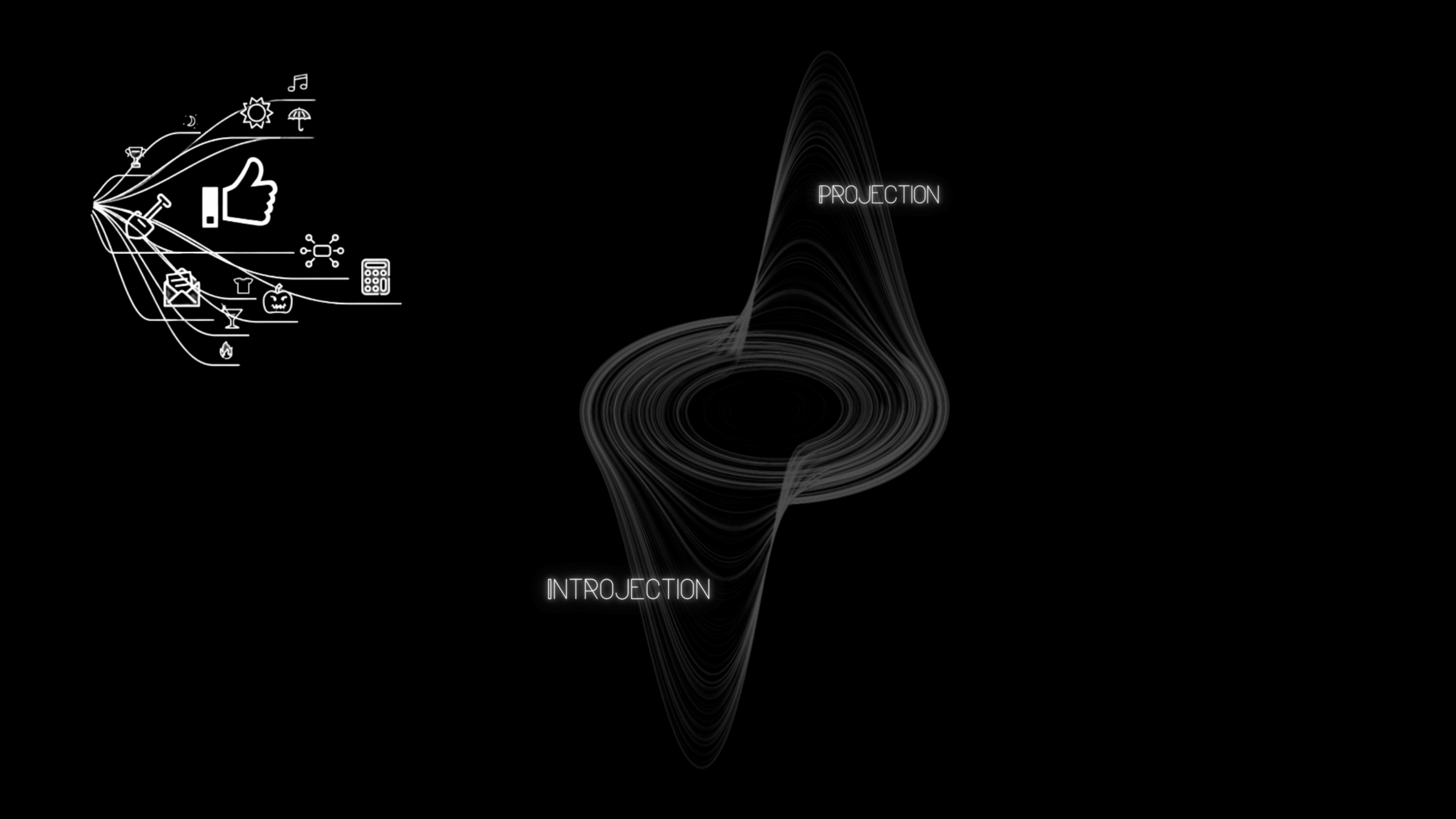
Danielle Freakley, Imaginary Friend Archive, Museum of Western Australia 2024. Credit, Danielle Freakley.
Imaginary friendships have many unsuspecting and valuable other roles throughout our lives as one of our integral internal support mechanisms. Importantly, they help reveal how we can process death, isolation and general integration of others within us. Imaginary friends play a part in facilitating our social survival. They are social backup generators. In the pandemic, people found themselves much more attached to characters in Netflix shows, to plants in their gardens when in-person human contact was not as readily available. I felt fortunate to have the time to explore these relationships deeply in the pandemic period.
We are social creatures and companionship is a human need. Everyday we find ways to meet our needs regardless of other human beings being physically present. Imaginary friendships are not simply something twee for children or psychotic adults, they are a powerful part of our social survival. Studies in wars and torture camps show those who could imagine a figure caring for them survived longer.
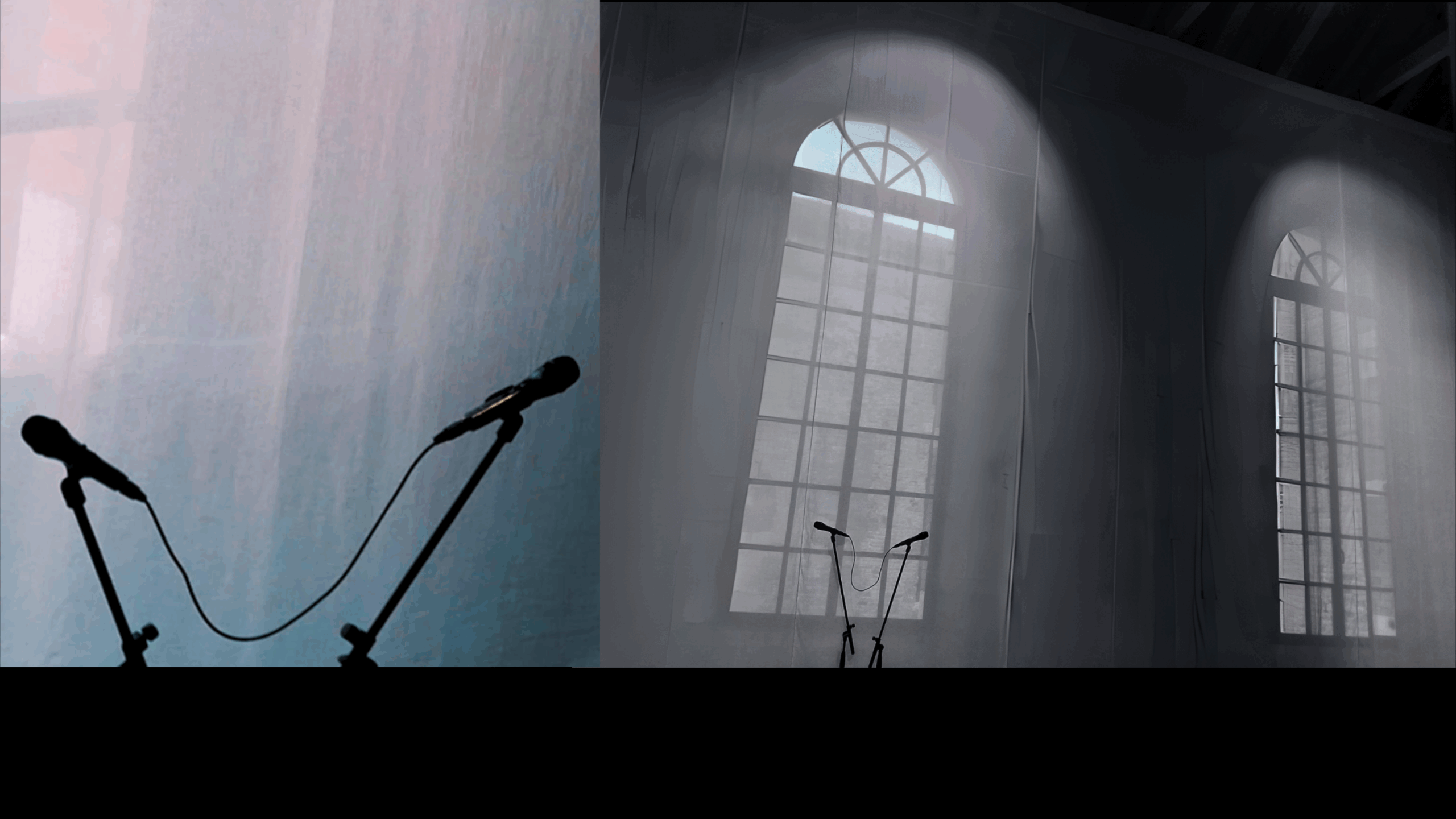
Danielle Freakley, Please Say, Social Practice, Microphones, Arsenal, Venice Biennale 2024. Credit, Danielle Freakley.
“her art practice is tangling ideas, visions, feelings, and philosophical work is detangling, providing extreme clarity and research.”
What or who inspires you in the realm of interdisciplinary practice, and why?
I love the way Adrian Piper talks about her interdiscipinary practice as a visual artist and a philosopher. She describes her need to both tangle and detangle, her art practice is tangling ideas, visions, feelings, and philosophical work is detangling, providing extreme clarity and research. These continuous opposing motions as both an artist and a philosopher, tangling/detangling feels like a paraphysical harmony, a smash and repair job simultaneously. It also feels as though one practice cannot exist without the other. Each field of practice almost exist somehow as a necessary constant relief from the other.
I feel many artists wish to be philosophers and many philosophers wish to be artists but, it is extremely rare for someone to work fully, be respected and accomplished in both fields. Adrian Piper has achieved this and has set a fellowship to also assist others through the gates and landmines of working across multiple fields.
She writes “Each one of us is completely unique, different from everyone else; and each one of us wants to be accepted for who we are. Yet we enter into groups – families, circles of friends, associations of colleagues – in which some parts of ourselves are valued and others are ridiculed or disparaged. We reveal to others in the group those parts that they approve, and conceal the parts they disapprove. So we each feel like outsiders to some degree in every group we are in; and each person in the group carries that same burden of difference alone, not realizing that everyone else in the group does, too. The quality and dimensions of our difference change with the particular groups we are in, ensuring that we always violate the defined boundaries of the group and feel like outsiders in some respect, in virtually any such group.” “Our first task must be a scholarly one: to clarify what these skills are and analyse the ways in which they function within the self as strategies of survival and flourishing in a global environment.”
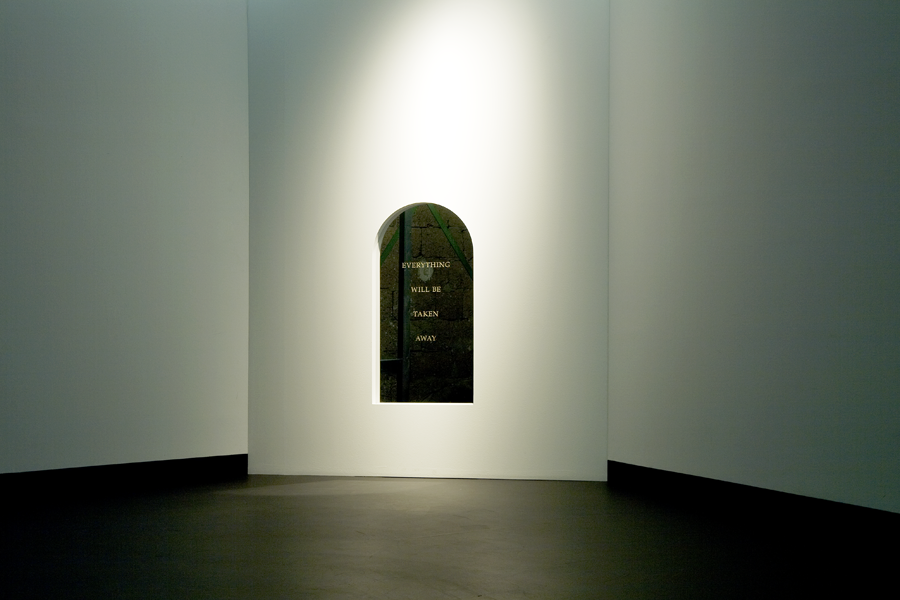
Adrian Piper, Everything #5.2; Mixed media installation: wood construction, plexiglass engraved with gold leaf text, lighting. Image Creative Commons.
I also love how Acconci moved from being a poet, to a world renowned performance artist and then a serious architect, and back to a poet in his senior years. I deeply love and respect Symbiotica and how much they have pioneered the biotech art field globally.
Another unexpected interdisciplinary artist is Diamanda Galas. A mother visited her after her concert, scolding Galas accusing her for frightening her young daughter in her concert. Galas questioned why she would bring a young child to see her performances when she was known for satanic themes, sounds of witches burning alive etc. After this encounter… Diamanda Galas had a realisation, of how consistently frightening her music had been through her adult life. She suddenly decided to enlist with a clown group and perform in children’s hospitals, discovering a new extremely child friendly version of herself that she herself did not even recognise at first. She admitted how much joy she felt engaging this part of herself in an entirely new opposite discipline. This second secret practice of clowning in children’s hospitals provided a perfect counterbalance to her highly intellectualised, gloriously horrifying and virtuoso music career.
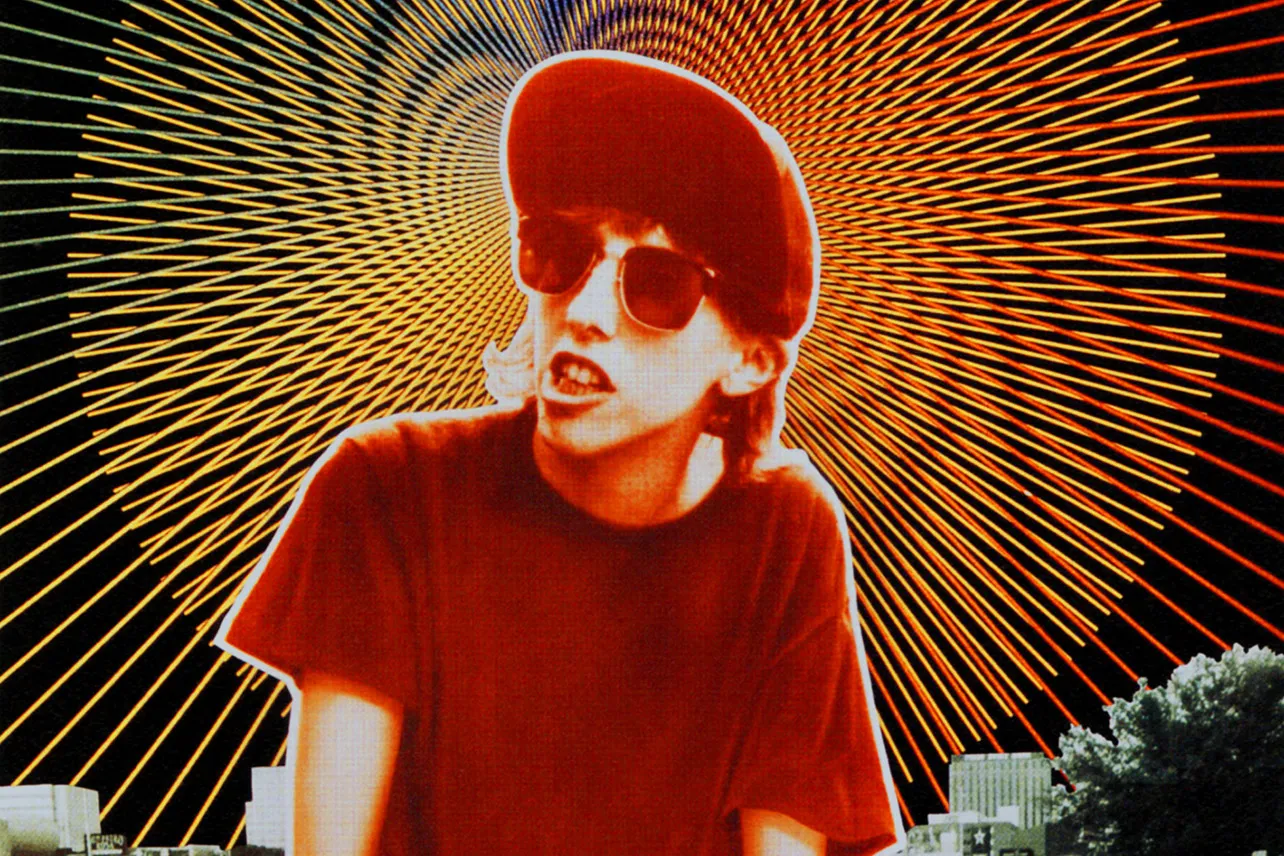
Theatrical release poster, Slacker, Photo: ©Orion Pictures Corp/Courtesy Everett Collection.
Name a cultural work (film, book, music etc) that inspired or challenged your creative perspective, and tell us why
I’ve watched the film Slacker by Linklater many times. The film is shot in Austin Texas and it captures something about the 90s grungy relaxed energy that feels sacred to that time. The camera follows different people throughout the town, beginning with Linklater catching a taxi from the airport. The camera almost feels like a spirit latching onto people it wanders through. It almost feels like it wasn’t filmed, like you are allowed to just float through this town endlessly. The characters also seem endlessly plucked from the air, there is no one person that feels like the last. The conversations are ongoing, lingering from one person to the next.
This is one of many works which I have felt creatively drawn to where the move through the population is key. Everybody is in focus and out of focus at the same time. Some of my more recent works, feel like they just surf through the world, through people in their own space and time.
In my work Please Say exhibited in Arsenale, Venice Biennale, Seychelles Pavilion, people could take a green strap and clip it onto their bag or belt. People could meet and have conversations with others through this strap. We gave 100,000 people this strap throughout the Venice Biennale.
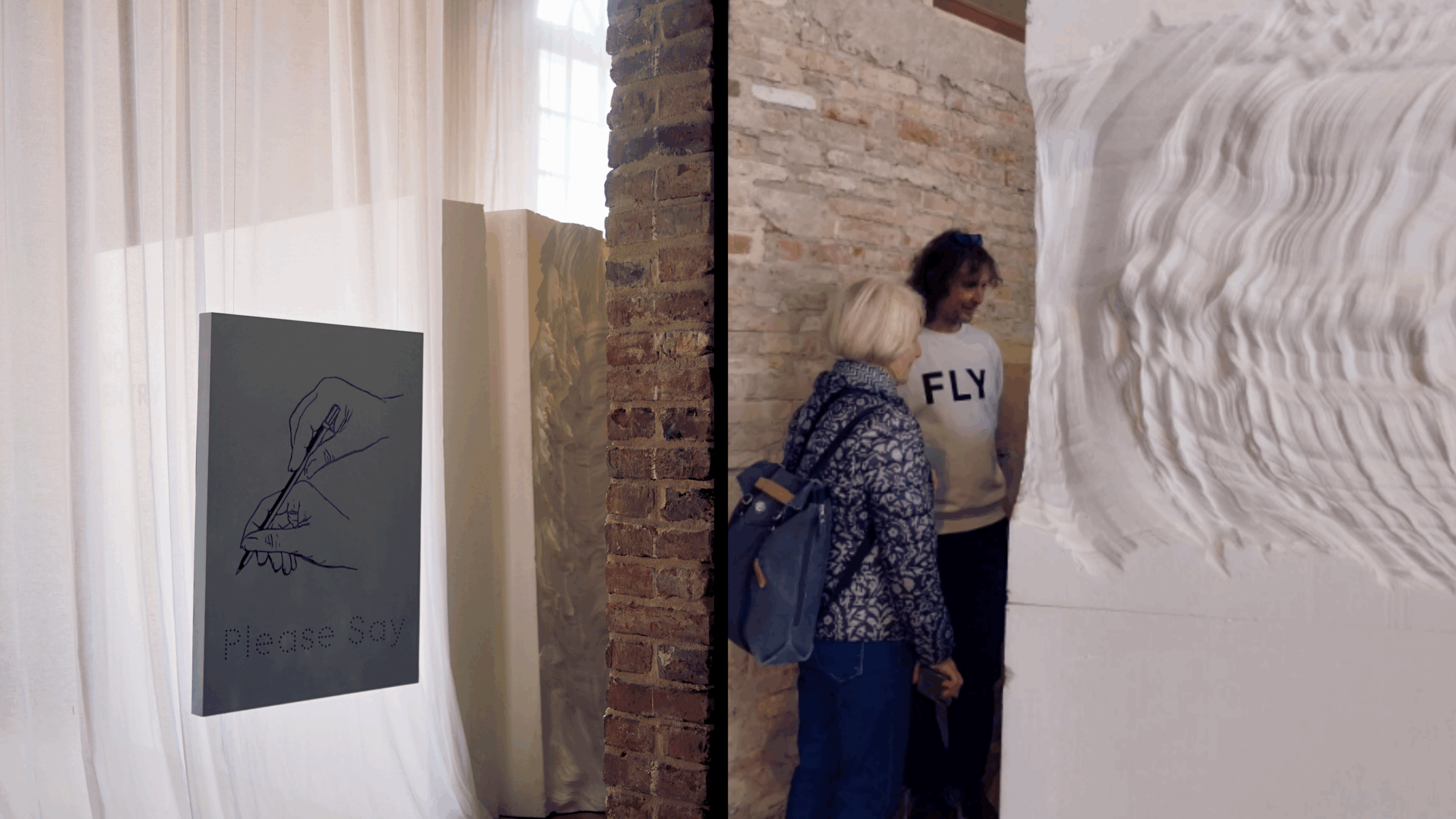
Danielle Freakley, For You, Polyurethane Sculpture, Moore Contemporary, 2022.
If you could collaborate with any figure from history or contemporary culture, who would it be and why?
I was speaking in referenced quotes in my everyday life at 26 years old, when I met Vito Acconci in New York. He noticed I spoke in referenced quotes and knew that I had spoken this way for over a year, he said he wanted to do this project with me… the project I was already doing. I was confused, but he seemed to want to collaborate in some way and he died not long after. I received a book of his work on my 20 birthday and I became too intimidated, afraid, I was a fan of his work. I wish I could go back in time and accept his invitation to collaborate.
What’s next? Tell us about your next project, collaboration or thinking.
I have been developing an XR project on imaginary friends worlds.
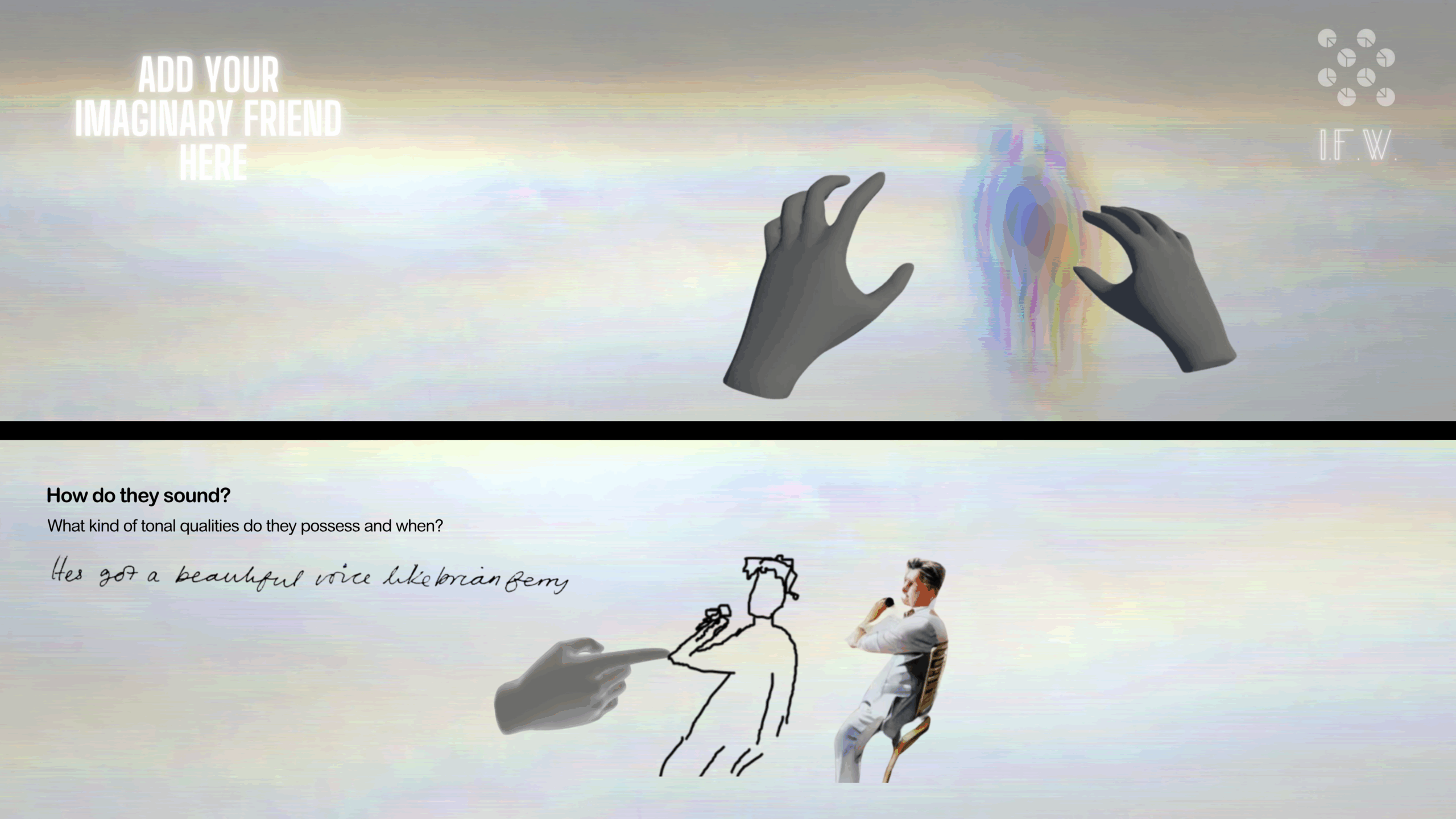
Danielle Freakley, Imaginary Friend Worlds in Development, 2025. Credit, Danielle Freakley.