Q&A December
In 2026, our monthly Q&A series turns its focus to the artists, peers and cultural leaders working alongside us to champion artists and the possibilities of interdisciplinary practice.
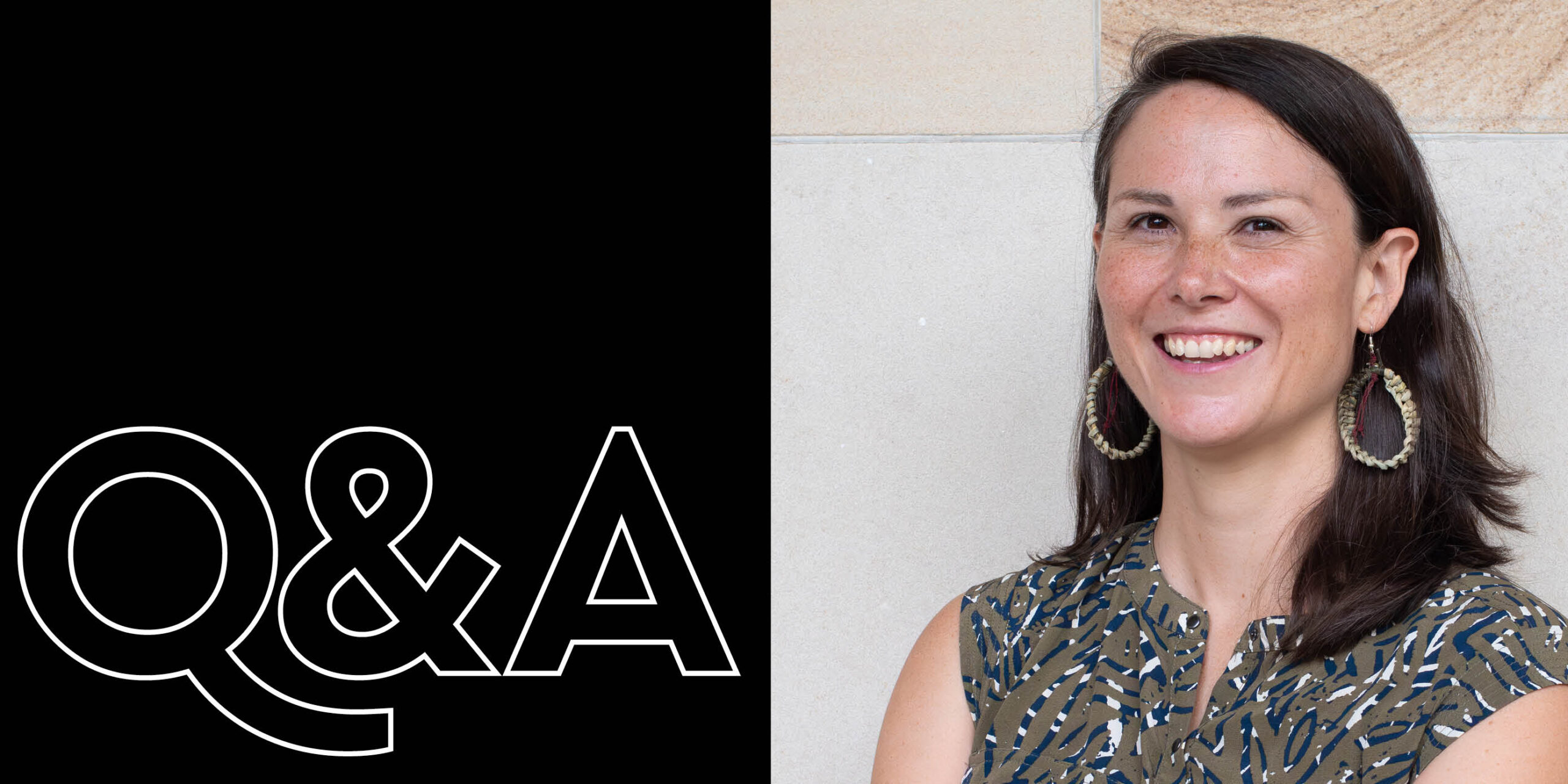
Dominique Chen, photograph Megan Pope.
Dominique Chen
Dominique Chen is a Gamilaraay woman, and interdisciplinary artist, researcher and educator. She is a Senior Lecturer in Art History at the School of Communication and Arts, University of Queensland. Her research areas include Indigenous Art and Indigenous Research Methodologies, and applied relational creative practices as they relate to the care of people and Country, including land management and cultural food growing. Dominique is a mother, writer, maker and avid gardener, and is passionate about the role of creative practice in making positive contributions to community, culture and Country. She is a co-founder of Aboriginal-run not-for-profit, Yuruwan, an organisation which supports learning opportunities for culturally-centred, urban-based food and medicine growing; and co-founder of The Blak Laundry, a collaborative performance/installation work with Ngugi Quandamooka artist Libby Harward.
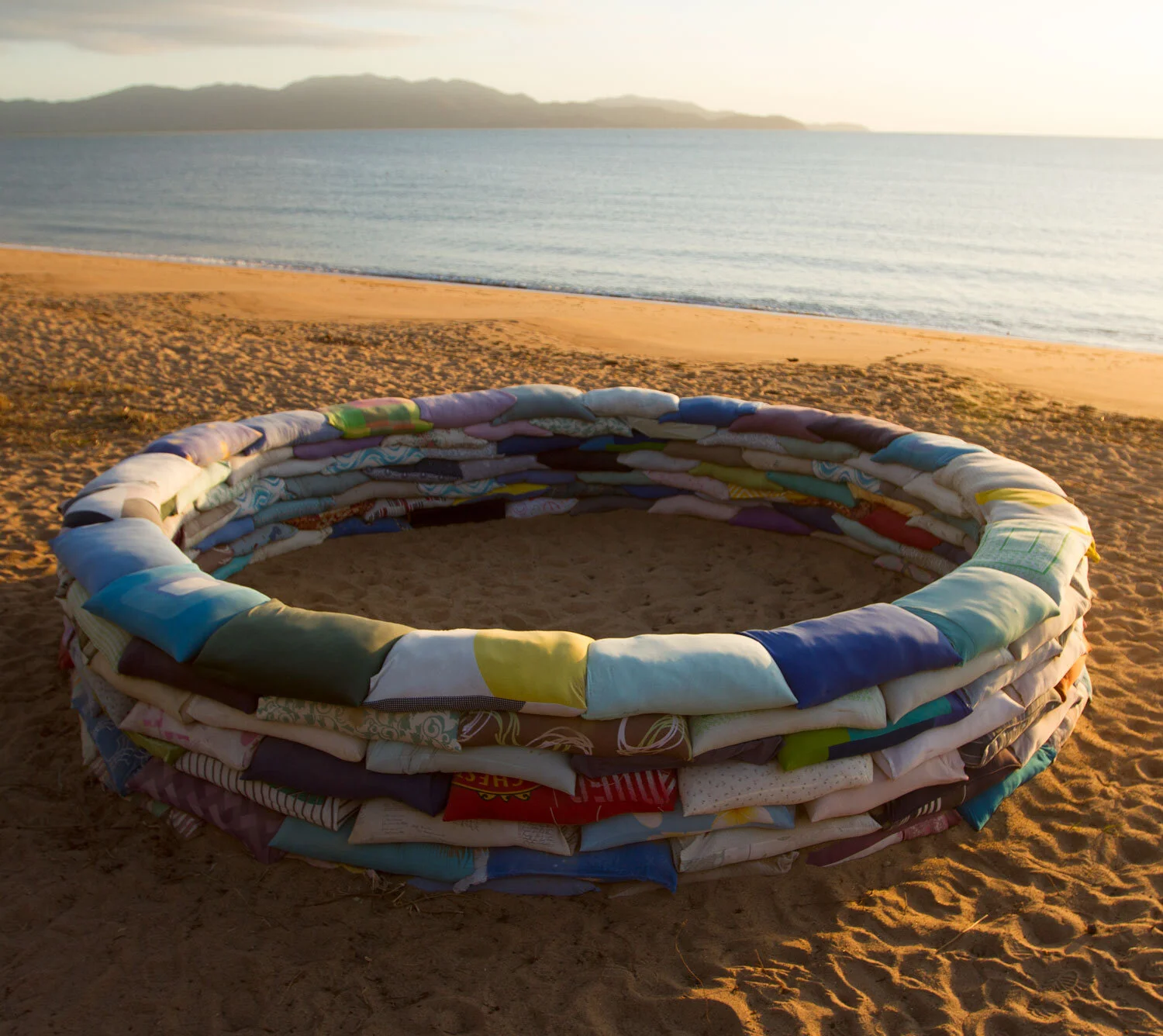
Dominique Chen and Sameul Chen. Dream Palisade 2019. Installation view on the Townsville strand.
How has collaboration across disciplines shaped your work and/or practice?
Coming from a cultural context that is innately interdisciplinary, or rather, undisciplinary, and that doesn’t always map neatly onto or into Western disciplinary definitions and boundaries, working across disciplines often feels a more natural and important process for me.
Interdisciplinary collaboration helps me to access a more connected, coherent, communicative and expanded way of working, thinking, being and knowing, requiring and facilitating a relationality that is at the heart of my life and practice. It’s a relational art to be able to come into the depth of a disciplinary frame and then also step back and see it in its broader totality.
Disciplines are man-made structures, frameworks and languages that have been constructed for sense-making within particular fields, but without broader and interconnected dialogue and perspective, can make an entire interconnected and interactive world appear to behave in ways that are isolated, decontextualised or resolute. Hard disciplinary boundaries, with their epistemological and methodological histories (often western ones), also have the propensity to become self-referential and self-limiting, setting up their own parameters for what is truthful, knowable, valuable, or normative.
Working beyond disciplinary boundaries can loosen these insular perspectives and ways of working, and open up spaces that feel liberating, not just intellectually but creatively and culturally.
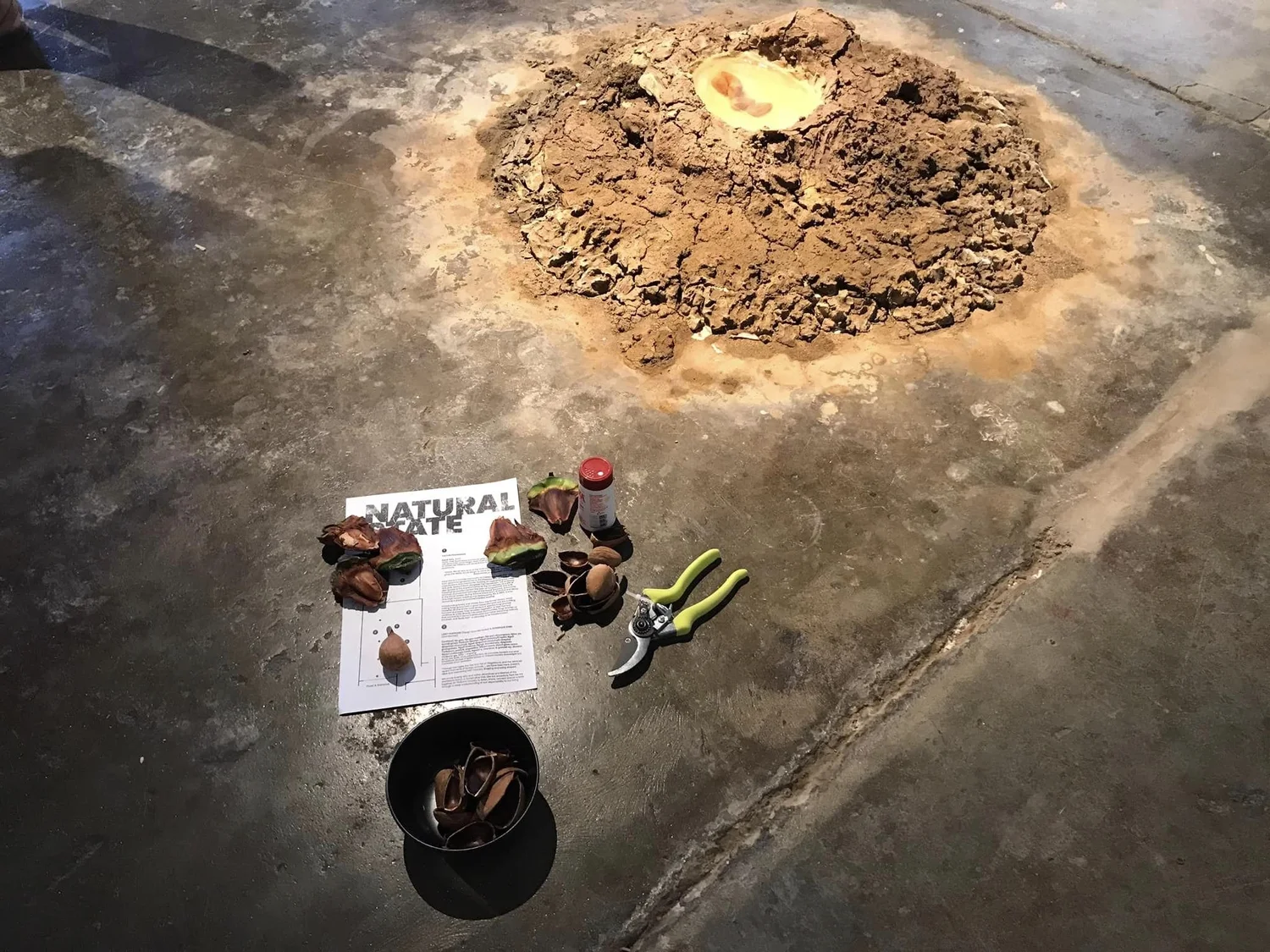
Dominqiue Chen and Libby Harward. (Untitled) 2022, as part of the Natural State exhibition by Caitling Franzmann. Installation showing the bunya ferment along with remnants from a relational conversation, and sharing of bunya nuts at the Condensory, Somerset Regional Art Gallery. Image by Filmertography.
Which film, book, exhibition or moment shifted the way you see the world?
I’m not sure there has been a single work or moment that’s changed the way I see the world—my life experiences and learnings in all forms have shaped and grounded my outlook, but certainly there have been (many!) creative works in all forms that have moved and impacted me deeply and irreversibly, and in particular place/time moments.
The first was seeing Baraka (1992), Ron Fricke’s non-narrative documentary film, which I saw in my mid-teens. I haven’t watched it for over two decades, and I’m not sure if the many representations of Indigenous peoples throughout would hold up if I watched it again, but the way in which it brought a strong, sharp and witnessing lens to the abuse of the environment for the sake of production, capital and commodity, really hit hard for me as a young person, just waking up to such toxic, dominating and globalised ways of being in the world.
The second was Archie Moore’s exhibition 1970–2018 at Griffith University Art Museum in 2018. The work was profoundly impactful—the way Archie conjured a psychological architecture that you could inhabit, reconfiguring the usual institutional gallery space and its control and curation of gaze and proximity, and tacit objectivity. The felt agency and self-determination of Archie guiding that (oftentimes difficult) experience was really empowering for me, and opened up space for the possibilities of experiential, embodied and spatial practice alongside the purely visual and two-dimensional work I had been engaging with up until that point. In retrospect, the experience of the exhibition has very slowly and softly guided much of my subsequent practice, and thinking around the importance of space, containers and place-based contexts.
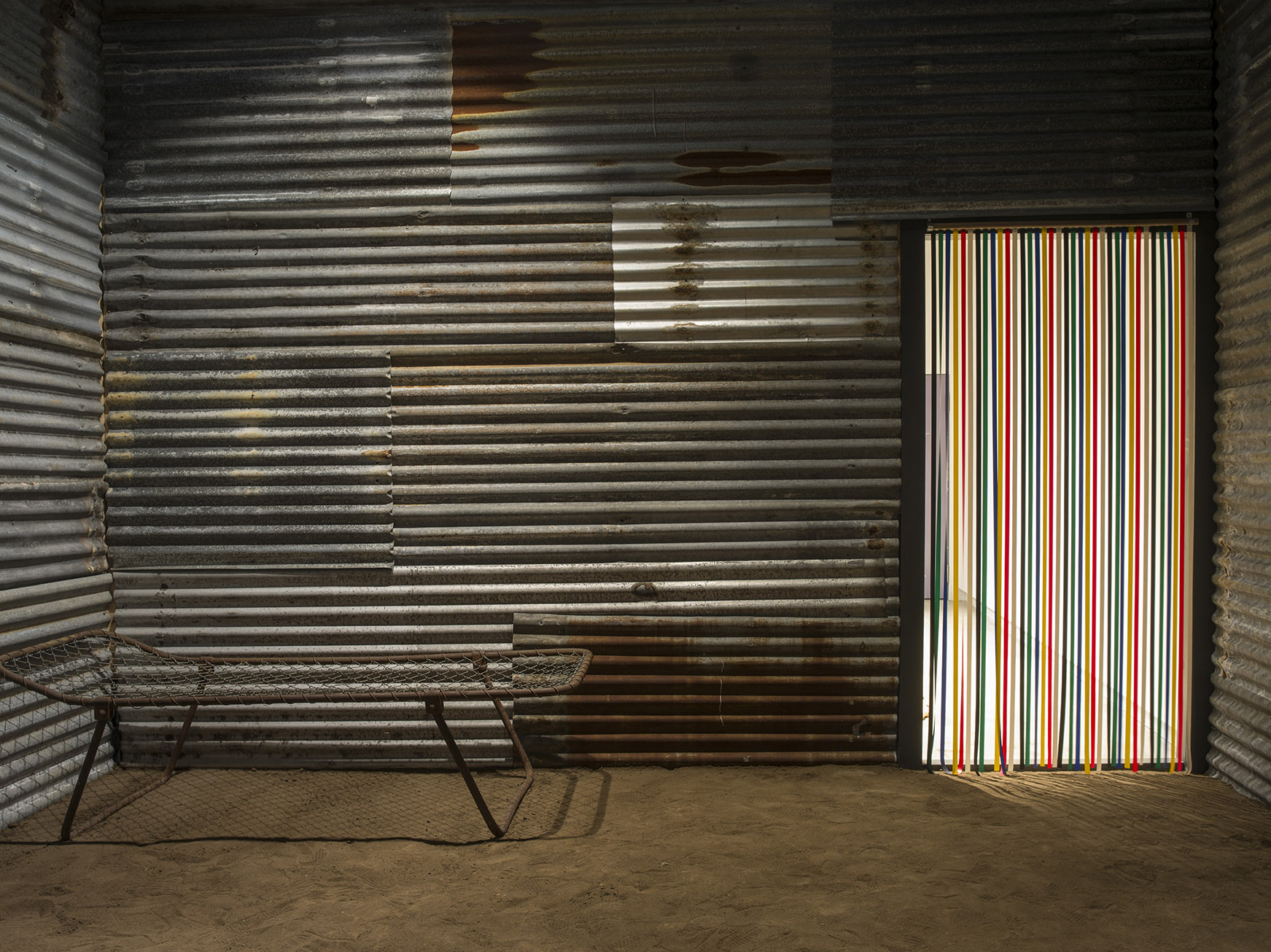
Archie Moore, 1970 – 2018 exhibition installation view, Griffith University Art Museum, 2018. Photograph Carl Warner.
Who would be your dream collaborator and what would you want to create together?
My dream collaborators are always my community and Country. In terms of what I would want to create, I think the impulse to decide what to create before you’ve started on that collaborative journey is somewhat counterintuitive to how I understand collaboration. For me, the real generative and powerful parts of collaboration are that you don’t know what the sum of your parts are going to equal, and simply the value of doing that deep listening and connecting and together processing…asking what is in and around us, in our hearts and bodies in this place/time moment…what stories are wanting to be told or retold…and what stories and ideas are sitting in and only made possible through the spaces in between us. So perhaps another way to say that, is the thing I want to create together is the relationship and collaborative process. The relationship is the project, as they say.
Speaking a little more directly to the question, in a broad sense, I want to create work that is meaningful, generative and has genuine, tangible and reciprocal outcomes for people and Country. Not just work whose benefit flows one way into galleries, into institutions, or ends up purely as someone else’s cultural capital and commodity. I’m deeply interested in applied creative practice and outcomes that revitalise culture, foster connection, and are healing, reparative and regenerative.
What’s next on your horizon — a project, an idea, a wild experiment?
This question really makes me think about how in my current circumstance, having the physical and mental time and space for wild experimentation feels like a real privilege. The daily grind is real, and it sometimes feels difficult to disconnect from constant deadlines, deliverables and continual and expected outcomes to simply play. True experimentation (risk taking and learning into process over outcome), in the mainstream socio-cultural and economic systems we find ourselves in, unfortunately needs time/space/money resourcing. I also feel Indigenous artists in particular can feel additionally pressured into producing work that is palatable, accessible, or fits particular expectations for it to be funded/resourced given the colonial capitalist nature of the arts industry and many art institutions, creating further containment around geniuine and critical experimentation.
In saying all of that, I am always digesting and thinking about ways to make work that is relevant and responsive, especially in areas and spaces that could benefit from creative and connective processes. For me, creativity and relationality are powerful salves to the harm and trauma of this world, and the older I get, the more concerned I am with how to I can put my creative skills and practice ‘to work’. At the moment, this looks like my academic teaching and research (I’m currently co-writing a paper on Country-centred ethics with trawlwoolway environmental scientist Coen Hird and artist Rachel O’Riley; and looking to bring more practice-led and embodied thinking into the Indigenous art history subjects that I teach), as well the work I do with Yuruwan, facilitating relational events for community around urban Aboriginal food and medicine growing.
I’ve been so lucky to have some really excellent collaborators over the years, and some like Libby Harward and Caitlin Franzmann I continue to work with regularly on various projects when everything aligns. Working with Libby and Caitlin is like having one big ongoing conversation rather than working on isolated projects, where we can leave and pick up the yarn again wherever we left off, and no matter how much life has happened in between. This November we are collaborating on a project called Searching for the Knowledge Tree, a relational and participatory work programmed as part of the University of Queensland Art Museum and Climate Aware Creative Practice Networks (CPAP)’s Reflective Motives event.
Libby and I also continue to think together into The Blak Laundry, and what that might look like into an ever-evolving future. For me the Laundry has been such a fun, playful, powerful, important and critical space to inhabit, and to be really free and self-determined in creating work and contexts that are meaningful for me/us and our community. While I don’t know when the next activation/agitation of it will be, I feel continually inspired and grateful to know that it’s there, waiting for the machines to get turned back on, and for us to process a little bit more of the load.
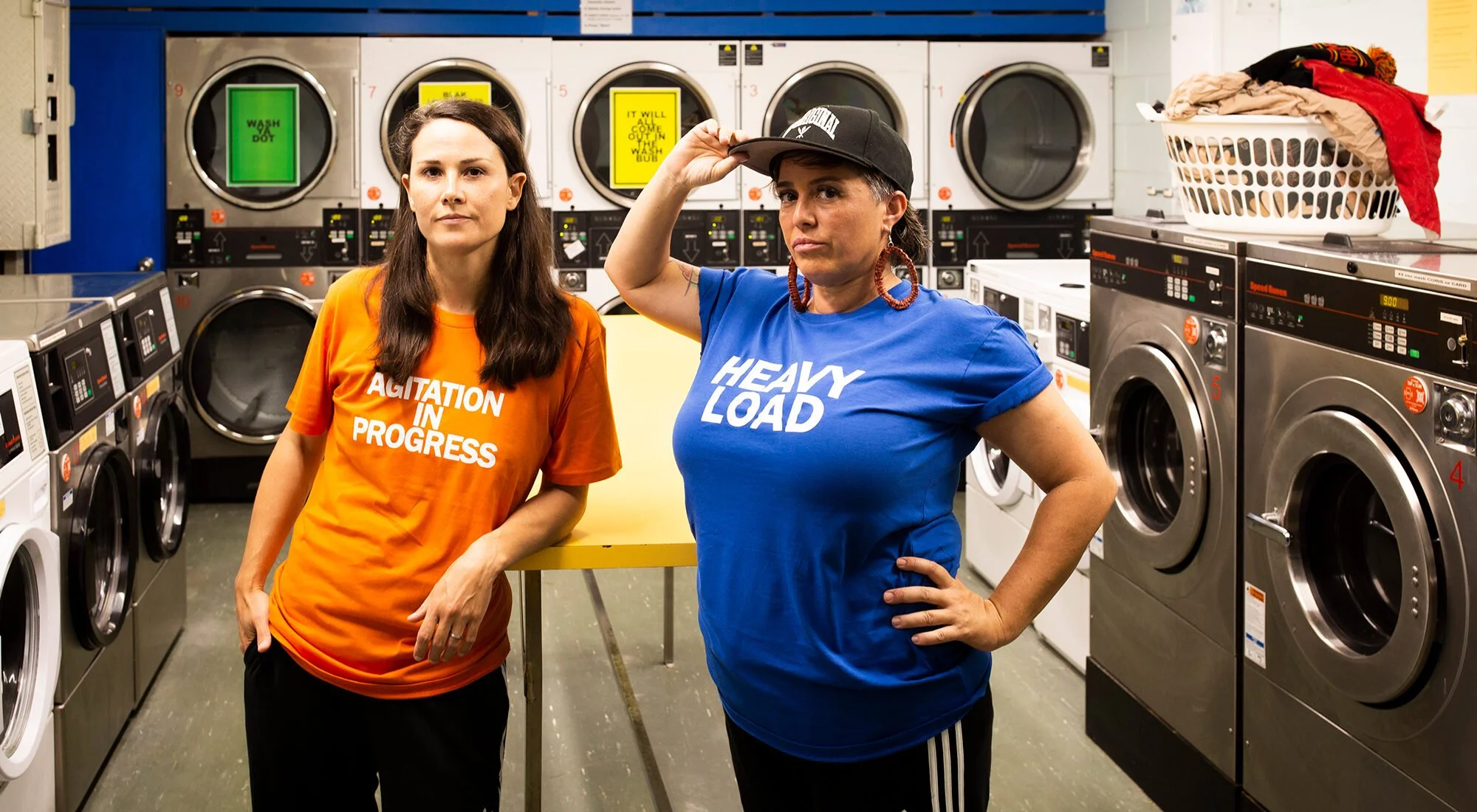
Dominique Chen and Libby Harward. Photograph Ketakii Jewson-Brown.
How do you see your work contributing to new ways of thinking or creating in the world?
I often feel a strange kind of tension about positioning my work as new or novel, given that much of my practice, and my ways of being and creating, come from my cultural contexts, values and ethics, which are themselves old and shared. Holding on to these values, especially the parts that are deeply relational and that affirm and enable relationships, can feel ‘novel’ in physical, intellectual, cultural and emotional environments that are increasingly disconnecting, individualistic and dissociating. I’m personally not of the view that we need to keep striving for the perpetually ‘new’ in everything, which I think ties into connected colonial capitalist conversations around perpetual growth, ‘innovation’ and ‘progress’, and of being unique or exemplary, the fittest to survive and rise above ‘the pack’. This idea of ‘new’ feels more like a veneer to me, covering over shallow processes that perhaps aren’t as alive and generative as the shiny end product might suggest.
In my experience, ’newness’, and the ability to problem solve, be responsive or adaptive, or to dream or make into what is seemingly impossible (to innovate), comes from going deeper into my relational skills and capacities—with people, materials, places, knowledges, and commitment to working in ways that are respectful, reciprocal, community-engaged, accountable, collaborative and embodied.
I hope that my practice demonstrates that creativity, in all its forms and manifestations, is a relational process in which everyone and everything belongs, and is needed.
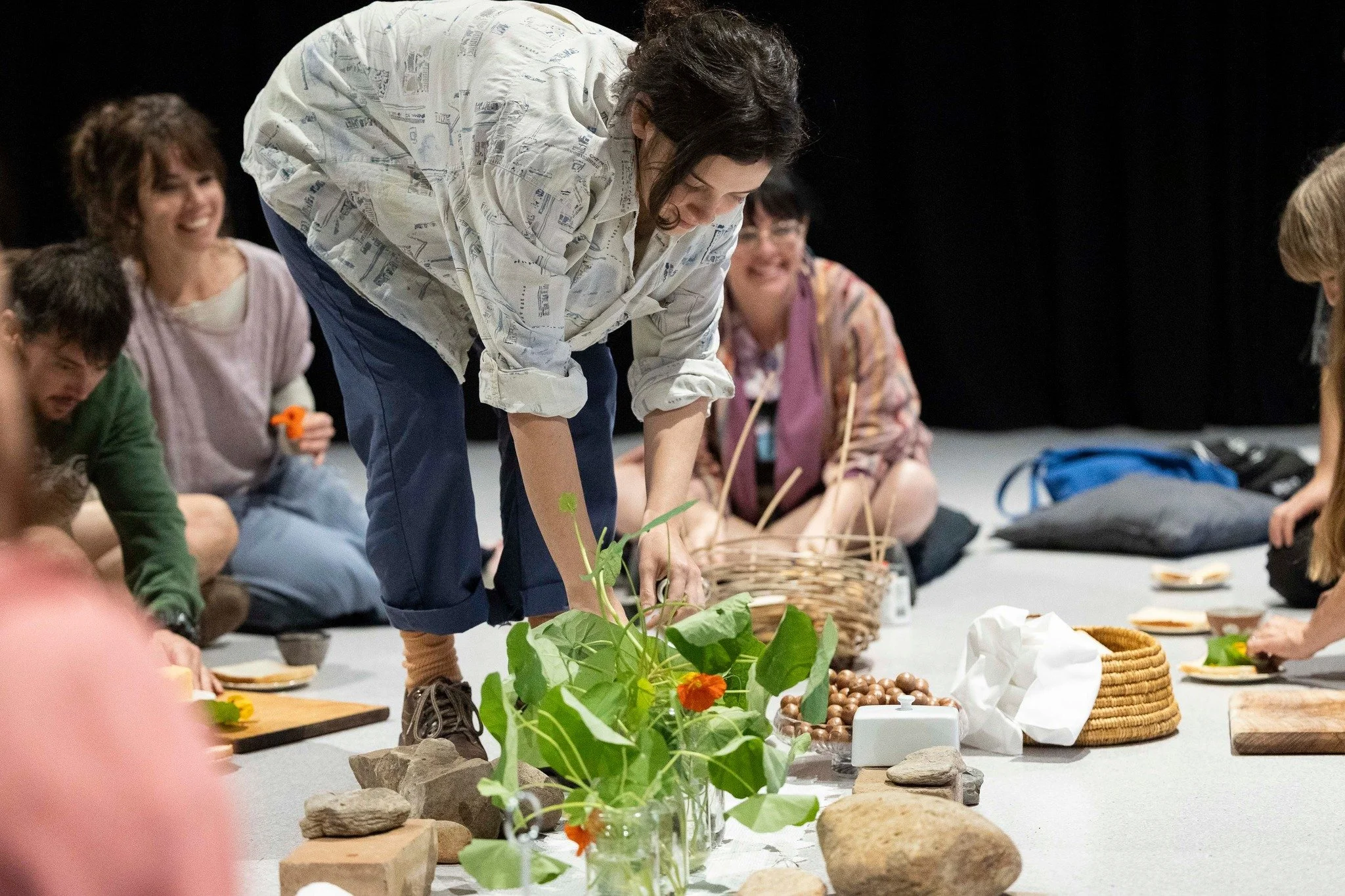
Dominique Chen, Caitlin Franzmann and Libby Harward, The Stories We Water, 2023. Performance still. Photograph Masimba Sasa.
What do you think of when you think about ANAT?
I find there can be a real blindness or deafness in some institutional spaces when it comes to genuine interdisciplinary work, particularly between the sciences and creative practice. Often, creative practice gets positioned as purely science communication, a way to make research accessible to a public audience; or science becomes a subject matter for artists to reference rather than a truly integrated way of thinking, making, being, and working together.
The work of ANAT is genuinely valuable in holding space for something more enmeshed and collaborative, beginning to peel away at the layers of what true art-science collaboration and interdisciplinary practice can mean. We are fast moving into social and environmental spaces that we need this more than ever. One of my all-time favourite authors, the late American science-fiction writer Ursula Le Guin perhaps says it best: “Science describes accurately from the outside, poetry describes accurately from the inside. Science explicates, poetry implicates. We need the languages of both science and poetry to save us from merely stockpiling endless ‘information’ that fails to inform our ignorance or our irresponsibility.”